
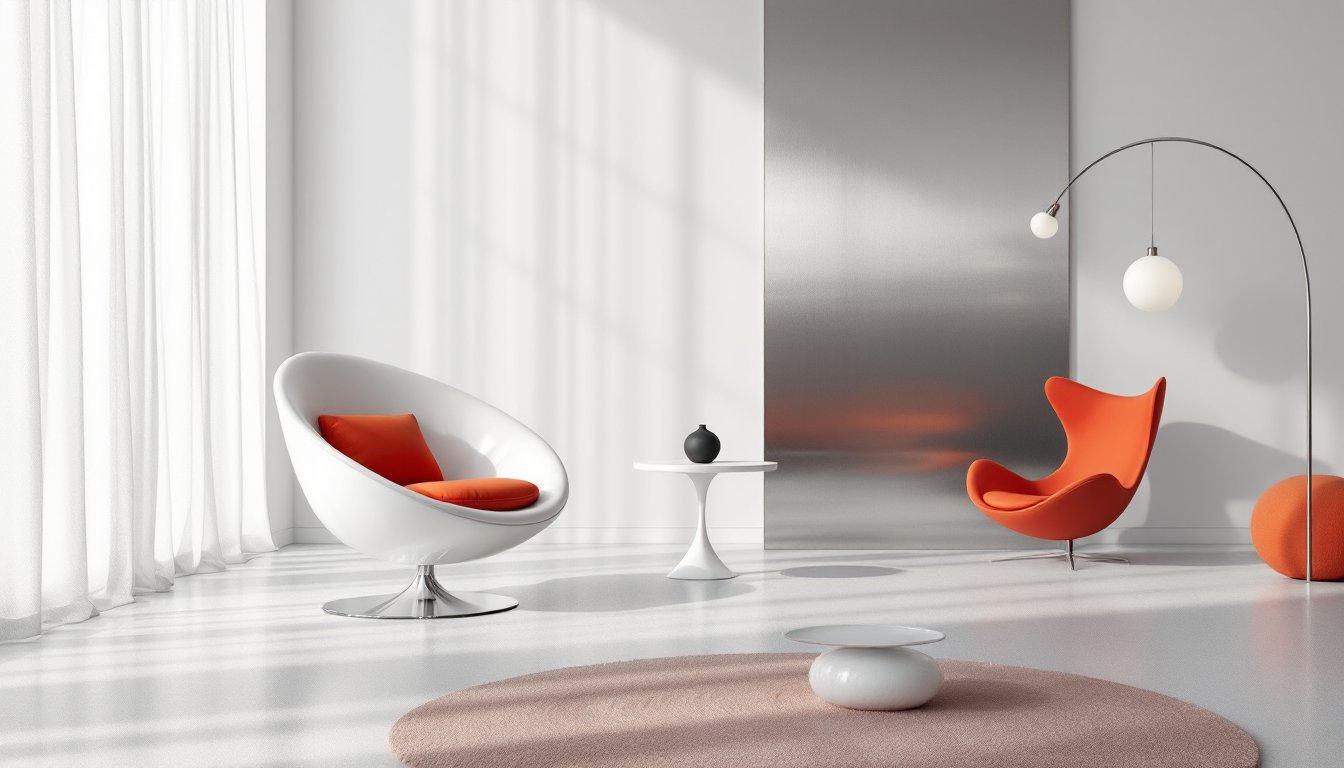

Space Age interior design isn’t about recreating a sci-fi set, it’s a distinct aesthetic born in the 1960s when atomic optimism met midcentury modernism. Think molded plastic chairs, pod-shaped furniture, and walls bathed in metallic finishes. The style has evolved beyond retro pastiche into something relevant for 2026: clean, sculptural, and unmistakably futuristic. Unlike minimalism’s obsession with restraint, Space Age design embraces bold form, reflective surfaces, and a playful nod to what “tomorrow” looked like decades ago. This guide covers the core elements, practical ways to incorporate them without gutting a room, and how contemporary designers are reinterpreting the look for modern homes.
Key Takeaways
- Space Age interior design blends 1960s atomic optimism with bold sculptural forms, molded plastics, and reflective metallic finishes that remain relevant in modern homes.
- Incorporate space age design selectively by anchoring one or two statement pieces—like a pod chair or tulip table—within a monochromatic base and pops of saturated color.
- Metallic finishes, LED lighting, and high-gloss surfaces are non-negotiable elements that create the reflective, futuristic environment central to the aesthetic.
- Modern interpretations prioritize sustainable materials like recycled composites, 3D-printed furniture with bio-resins, and PVD coatings instead of traditional chrome plating.
- Space age interiors demand precision and restraint—clean geometry, minimal clutter, and carefully curated surfaces are essential to avoid a cluttered or dated appearance.
- DIY-friendly alternatives include thermoformed acrylic panels, CNC-routed MDF with automotive paint, and peel-and-stick luxury vinyl flooring for renters and budget-conscious projects.
What Is Space Age Interior Design?
Space Age design emerged in the late 1950s and peaked during the 1960s Space Race, when designers like Eero Aarnio, Verner Panton, and Joe Colombo reimagined interiors through a lens of technological optimism. The aesthetic prioritizes futuristic forms over traditional comfort cues, furniture that looks like it belongs in a lunar module, not a Victorian parlor.
Key characteristics include:
- Molded plastics and fiberglass: Materials that allowed for smooth, continuous curves impossible with wood or metal alone
- Pod and orb shapes: Spherical chairs, egg-shaped seating, and bubble-like hanging fixtures
- High-gloss finishes: Lacquered surfaces, chrome, and mirrored elements that reflect light and create visual depth
- Bold, often monochromatic color palettes: Stark whites, oranges, reds, and metallic tones dominate
- Low-profile or floating furniture: Pieces that appear weightless or suspended, rejecting heavy, grounded traditional forms
This wasn’t decoration for decoration’s sake. Designers were experimenting with new manufacturing techniques, injection molding, vacuum forming, and bent plywood under heat, that made organic, flowing shapes commercially viable. The style also reflected a cultural moment: the belief that technology would solve problems and that the future would be sleek, automated, and uncluttered.
Space Age design differs from Atomic Age or Mid-Century Modern styles, though they overlap. Atomic leaned on starburst motifs and boomerang shapes: Mid-Century favored wood, natural materials, and Scandinavian restraint. Space Age went all-in on synthetic materials and unapologetically bold geometry.
Key Elements of Space Age Style
Futuristic Furniture and Sculptural Forms
Space Age furniture treats seating and surfaces as sculpture. The Ball Chair (Aarnio, 1963) and Panton Chair (Panton, 1960) are icons of the movement, single-material, single-form pieces with no visible joints or traditional upholstery.
When sourcing or building Space Age furniture, look for:
- Molded or cantilevered seating: Chairs without rear legs, using material flex for support
- Integrated cushions: Upholstery that follows the form rather than being tacked on
- Geometric or organic curves: Avoid right angles: think ellipses, parabolas, and asymmetrical balance
- Modular or stackable designs: Pieces that emphasize efficiency and adaptability
For DIYers, replicating true molded plastic forms is impractical without industrial equipment. But, fiberglass resin kits and vacuum-formed acrylic panels are available for smaller accent pieces like light fixtures or wall panels. Alternatively, focus on sourcing vintage reproductions or contemporary designs that echo the aesthetic, brands like Kartell and Vitra produce licensed reissues.
Safety note: When working with fiberglass resin, wear a respirator rated for organic vapors (not just a dust mask), nitrile gloves, and work in a well-ventilated space. Polyester resin fumes are hazardous.
Chrome, Metallics, and Reflective Surfaces
Metallic finishes are non-negotiable in Space Age interiors. Chrome-plated steel, brushed aluminum, and high-gloss lacquer create the reflective, light-bouncing environment central to the style.
Practical applications:
- Furniture legs and frames: Swap wood legs on existing pieces for hairpin or tulip-style chrome bases
- Accent tables: Lucite (acrylic) or smoked glass tops on metal bases
- Wall treatments: Metallic paint (try automotive-grade urethane for durability) or adhesive vinyl films in brushed steel or chrome
- Lighting fixtures: Pendant globes, arc floor lamps with polished metal arms, or LED strip lighting integrated into coves or under floating shelves
When painting walls or furniture with metallic finishes, surface prep is critical. Any imperfection, drywall seams, dust nibs, brush marks, will telegraph through reflective paint. Use a high-build primer, sand to 220-grit smoothness, and apply metallic topcoats with a foam roller or HVLP sprayer for the smoothest finish.
Chrome-plating isn’t a DIY process, but chrome spray paint (available in rattle cans) works for small decorative items. For larger pieces, consider powder coating services, which offer durable metallic finishes and are widely available through automotive or industrial coating shops.
How to Incorporate Space Age Design in Your Home
Full commitment to Space Age design can feel stark or cold in a lived-in home. Most homeowners benefit from a layered approach, anchoring one or two statement pieces within a more flexible backdrop.
Start with a focal piece of furniture. A pod chair, an Eames-era molded plastic shell chair, or a tulip table (Saarinen’s pedestal design) immediately signals the aesthetic without requiring a room overhaul. These pieces are widely available as vintage originals, licensed reissues, or budget reproductions.
Control the color palette. Space Age interiors work best with:
- Monochrome bases: White, black, or gray walls and flooring
- Pops of saturated color: Orange, red, or electric blue in single accent pieces (one chair, one lamp, one rug)
- Metallic accents: Chrome, brushed nickel, or polished aluminum in hardware, fixtures, and trim
Avoid mixing too many colors, this isn’t Bohemian or eclectic design. Restraint and repetition of a tight palette create cohesion.
Update lighting fixtures. Swap traditional chandeliers or flush-mounts for Sputnik-style fixtures, globe pendants, or arc floor lamps. LED strip lighting installed under floating vanities, behind headboards, or along baseboards adds the ambient glow common in futuristic interiors. Use color-tunable LED strips (RGBW) sparingly, pure white (3000K–4000K) typically looks cleaner than shifting hues.
Flooring and walls. High-gloss epoxy flooring or polished concrete fits the aesthetic better than carpet or wood. For renters or budget-conscious projects, peel-and-stick luxury vinyl tile (LVT) in solid white or gray works. Walls can stay neutral, but consider one accent wall in metallic wallpaper or a high-gloss lacquer paint (requires professional application for best results, brush marks ruin the effect).
Textiles and soft goods. Space Age interiors use textiles minimally. When present, they’re usually synthetic fabrics, vinyl, acrylic, or polyester, in solid colors. Shag rugs in white or bright orange are period-appropriate, though they’re maintenance headaches (stick with low-pile synthetics for easier cleaning).
Avoid over-accessorizing. Space Age design is about form and light, not clutter. Keep surfaces clear. If displaying objects, choose sculptural items in matching materials, ceramic or resin geometric forms, not tchotchkes or plants (though a single large Monstera or Sansevieria in a glossy white planter can work).
Modern Interpretations of Space Age Aesthetics
Contemporary designers are revisiting Space Age principles with updated materials and sustainability in mind. The 2020s version leans less on petroleum-based plastics and more on recycled composites, bio-resins, and powder-coated metals.
Key trends in 2026:
- 3D-printed furniture: Designers are using PLA (polylactic acid) and PETG filaments to create organic, flowing forms that echo 1960s molded plastic but with renewable materials. Large-format 3D printers can produce chair frames or sculptural lighting in one continuous print.
- Integrated smart lighting: Modern Space Age interiors incorporate tunable white LEDs and app-controlled systems (Philips Hue, LIFX) for dynamic lighting scenarios, replacing static fixtures.
- Minimalist tech integration: Wireless charging surfaces built into tables, hidden cable management, and flush-mounted outlets maintain the clean-lined aesthetic.
- Sustainable metallics: Instead of chrome plating (which involves toxic hexavalent chromium), manufacturers are using PVD (physical vapor deposition) coatings in titanium nitride or stainless finishes, more durable and less environmentally damaging.
For DIYers interested in a modern take, consider:
- CNC-routed MDF or plywood finished in high-gloss automotive paint for custom furniture
- Thermoformed acrylic panels (easier than fiberglass, can be heated and shaped at home with a heat gun and simple jigs)
- Magnetic or modular wall panels in powder-coated steel for reconfigurable accent walls
These approaches let homeowners capture the futuristic spirit without relying on vintage pieces or environmentally questionable materials.
Conclusion
Space Age interior design translates best when approached selectively. One sculptural chair, a metallic accent wall, or a statement light fixture can anchor a room without making it feel like a museum exhibit. Focus on clean geometry, reflective surfaces, and restrained color. The style rewards precision, sloppy finishes or cluttered arrangements break the illusion. Whether sourcing vintage Panton chairs or fabricating custom acrylic panels, the goal remains the same: a space that feels optimistic, uncluttered, and unmistakably forward-looking.