
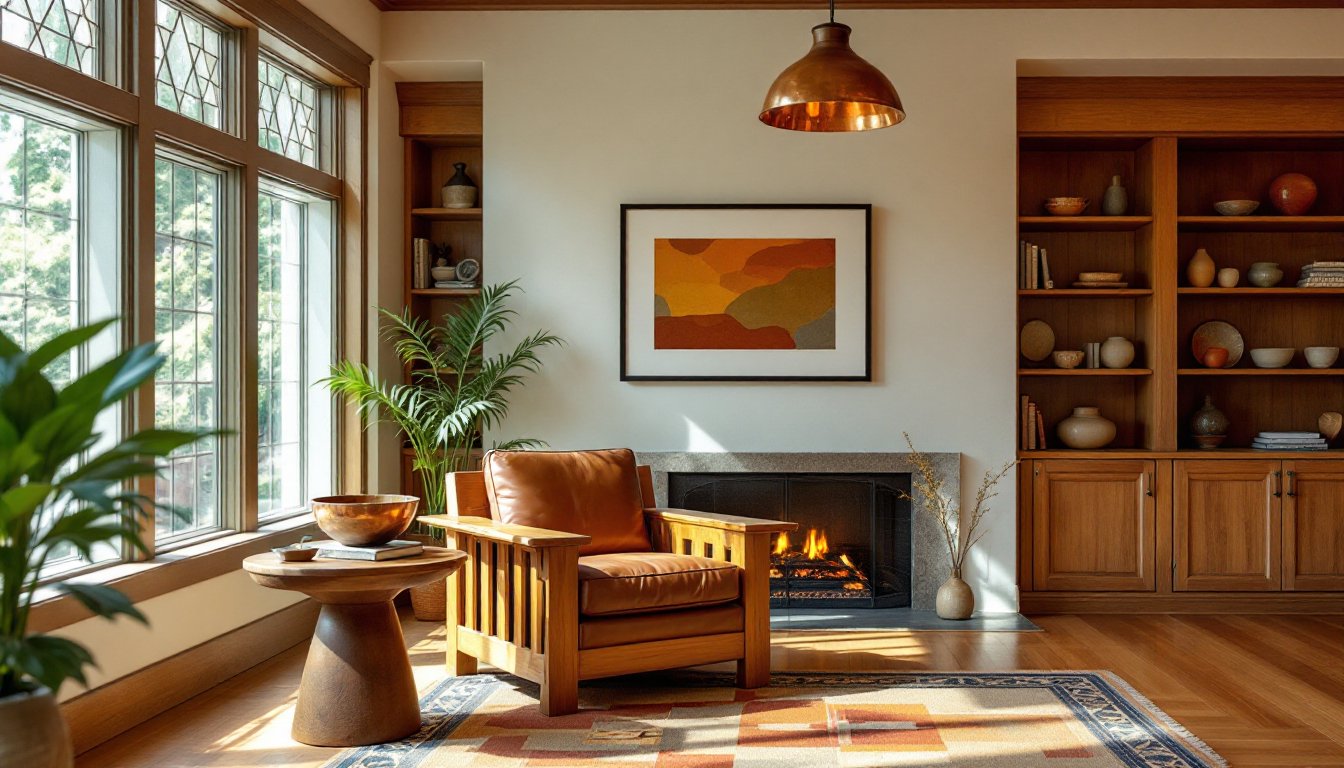

Mission style interior design emerged from the American Arts and Crafts movement of the late 19th and early 20th centuries, a deliberate pushback against the ornate excess of Victorian-era design. This style champions honest construction, functional beauty, and a return to handcrafted quality. Homeowners drawn to mission style appreciate its clean lines, sturdy furniture, and natural materials, qualities that still feel modern a century later. Whether renovating a period bungalow or simply wanting furniture that’ll outlast trends, understanding mission style’s principles helps create interiors with lasting character and integrity.
Key Takeaways
- Mission style interior design prioritizes honest construction, visible joinery, and natural materials like quartersawn oak, reflecting its roots in the late 19th-century Arts and Crafts movement.
- Start incorporating mission style with one or two anchor furniture pieces—such as a Morris chair or trestle dining table—rather than renovating an entire room at once.
- Authentic mission style relies on a warm, nature-inspired palette of earth tones, natural fiber textiles, and hand-hammered copper or wrought iron hardware that develops character over time.
- Built-ins, lighting retrofits, and woodwork upgrades offer accessible ways to add mission style to existing homes without requiring complete renovation.
- Mission style, Craftsman, and Arts and Crafts terms describe related but distinct concepts—focus on core principles of quality materials and functional beauty rather than getting caught up in terminology.
What Is Mission Style Interior Design?
Mission style refers to a specific design aesthetic that developed between roughly 1890 and 1920, closely tied to the Arts and Crafts movement. The name comes from the furniture’s resemblance to pieces found in Spanish Colonial missions throughout California, though the style itself owes more to reformist design philosophy than actual mission furniture.
At its core, mission style rejects unnecessary ornamentation in favor of visible joinery, solid construction, and functional design. Furniture pieces display their structure openly, mortise-and-tenon joints, through-tenons, and quartersawn oak grain become decorative elements themselves. This “truth to materials” philosophy meant letting wood look like wood, showing how pieces were actually built rather than hiding construction behind veneers or applied decoration.
The movement gained momentum through figures like Gustav Stickley, whose furniture company popularized mission oak pieces through catalogs and his influential magazine The Craftsman. Stickley and contemporaries like the Roycroft community and Charles Limbert created furniture meant to last generations, priced for middle-class buyers who valued quality over fashion. This democratic ideal, well-made design accessible beyond the wealthy, remains central to mission style’s appeal.
Key Characteristics of Mission Style Design
Furniture and Woodwork
Mission furniture is immediately recognizable by its rectilinear forms and exposed joinery. Quartersawn white oak dominates, chosen for its distinctive ray flake figure and dimensional stability. The quartersawing process, cutting lumber perpendicular to the growth rings, produces lumber that resists cupping and warping, making it ideal for furniture that’ll actually last.
Typical pieces include:
- Morris chairs with adjustable backs and wide, flat arms
- Trestle dining tables with visible tenons extending through uprights
- Settle benches with slatted backs and sides
- Bookcases with through-tenon construction and plain glass doors
- Sideboards featuring hammered copper or iron hardware
Joinery is structural and decorative. Through-tenons (where the tenon passes completely through the mortise and is visible on the other side) are often slightly proud of the surface and sometimes wedged or pinned with contrasting wood. Corbels (supportive brackets under tabletops or shelves) are common, providing actual structural support while creating visual rhythm.
Woodwork finishes are typically medium to dark fumed oak. Fuming uses ammonia vapors to react with tannins in oak, creating rich brown tones that deepen the wood’s natural character without obscuring grain. Modern reproductions often use aniline dye stains to achieve similar color. Whatever the method, the grain remains the star, no paint, no heavy varnish obscuring the wood’s figure.
Hardware tends toward hand-hammered copper, wrought iron, or darkened bronze. Drawer pulls are simple rings or bail pulls. Hinges are often strap-style or butterfly hinges, visibly mounted rather than concealed.
Color Palettes and Materials
Mission interiors work with a nature-derived palette: warm browns and tans from oak furniture, terra cotta and rust tones, deep greens, and golden yellows. These colors reference the California landscape that inspired much of the movement, earth, sand, sage, and sunset.
Textiles lean toward natural fibers:
- Linen for curtains and table runners
- Wool for upholstery and area rugs
- Leather for seating, often in tobacco brown or dark green
- Cotton canvas for pillows and cushions
Patterns, when used, tend toward geometric designs, stylized nature motifs (think acorns, ginkgo leaves, roses), or Native American–inspired designs. The movement admired indigenous craftsmanship, though modern interpretations should be thoughtful about cultural appropriation.
Lighting fixtures are another signature element. Mica or slag glass shades in amber, green, or cream colors diffuse light warmly. Fixtures themselves are often wrought iron or copper with straight lines and minimal embellishment. Think square lantern forms rather than fussy chandeliers.
Floors are typically hardwood, oak, naturally, often in strip or plank format. If the budget allows for quartersawn oak flooring, the ray flake adds subtle texture throughout a room. Area rugs define spaces, with vintage or reproduction Arts and Crafts designs preferred over Persian or overly ornate patterns.
How to Incorporate Mission Style into Your Home
Start with one or two anchor furniture pieces rather than attempting a complete room overnight. A mission oak dining table or Morris chair establishes the aesthetic and lets homeowners test whether the style fits their lifestyle. Authentic antiques offer character but require inspection for structural soundness, check joints for tightness and wood for splits. Quality reproductions from makers like Stickley (still in business) or smaller craftsman shops provide guaranteed stability with period-accurate joinery.
For built-ins and trim work, consider these approaches:
- Plate rails mounted 12–18 inches below ceiling height display pottery and create horizontal visual lines
- Box beam ceilings (decorative beams creating a grid pattern) add architectural interest: these are typically non-structural and can be added to existing ceilings with construction adhesive and screws into ceiling joists
- Simple baseboards and door casings in 1×4 or 1×6 oak with minimal profile, mission style favors flat, square-edged trim over elaborate mouldings
- Built-in bookcases flanking fireplaces, using through-tenon construction if skills allow or simple dados and face-frame joinery
When adding woodwork, match existing wood species if possible, or create intentional contrast. Mixing red oak (common in 1990s–2000s homes) with white oak doesn’t quite work, pick one and commit. Remember that nominal 1×6 lumber is actually 3/4″ × 5-1/2″, so plan accordingly when designing built-ins.
For walls, consider these finishes:
- Plaster with subtle texture (skip the heavy knockdown or popcorn)
- Flat or matte paint in warm neutrals, mission interiors weren’t glossy
- Wainscoting in flat panels (not beadboard) topped with a simple cap rail
- Tile in earth tones for fireplace surrounds or kitchen backsplashes, look for handmade or hand-glazed tiles with slight irregularities
Lighting retrofits offer relatively easy impact. Swap generic ceiling fixtures for copper or bronze pendants with mica shades. Install dimmer switches (standard single-pole dimmers work for most fixtures, but check LED compatibility if using LED bulbs). Add swing-arm wall sconces flanking beds or reading chairs.
Accessories and textiles complete the look:
- Display pottery from makers like Rookwood, Grueby, or contemporary studio potters working in Arts and Crafts styles
- Add copper bowls or trays, these develop natural patina over time (or use liver of sulfur solution to accelerate patina if desired)
- Hang framed Craftsman-era prints or nature photography in simple oak frames
- Use linen or cotton curtains on simple rods, avoiding fussy valances or swags
One caution: mission style can feel heavy if overdone. Balance dark oak furniture with lighter wall colors and adequate natural light. Not every piece needs to be quartersawn oak, mix in leather, metal, and textile elements to prevent visual monotony.
Mission Style vs. Craftsman and Arts and Crafts Design
These terms are often used interchangeably, which causes understandable confusion. Here’s how they relate:
Arts and Crafts is the broad international movement (1880s–1920s) that championed handcraftsmanship, honest materials, and design reform. It originated in Britain with figures like William Morris and spread to Europe and America.
Craftsman style refers specifically to American Arts and Crafts design, particularly as promoted by Gustav Stickley through his magazine The Craftsman (1901–1916). When discussing architecture, bungalows with low-pitched roofs, overhanging eaves, and front porches, “Craftsman” is the standard term.
Mission style describes the furniture aesthetic within the American Arts and Crafts movement. It’s characterized by rectilinear oak furniture with visible joinery. Some design historians use “mission” and “Craftsman” furniture interchangeably: others reserve “mission” for the more austere, straight-lined pieces and “Craftsman” for slightly more decorative examples.
In practical terms: a homeowner might live in a Craftsman bungalow (architectural style), furnished with mission oak furniture (furniture style), all part of the broader Arts and Crafts movement (design philosophy).
The Stickley family alone had multiple furniture companies with slightly different approaches, Gustav’s United Crafts, his brothers’ L. & J.G. Stickley, and the later Stickley-Brandt Furniture Company. Regional makers like Charles Rohlfs in Buffalo or the Roycroft community offered variations on the theme.
For DIYers planning projects, the takeaway is this: focus on the core principles (honest construction, natural materials, functional beauty) rather than getting stuck on terminology. Whether calling a project “mission” or “Craftsman,” the joinery, materials, and design intent matter more than the label.
Conclusion
Mission style’s staying power comes from principles that transcend trends: quality materials, visible craftsmanship, and functional design. It’s a forgiving aesthetic for DIYers because it celebrates honest construction, mistakes and all, within reason. A slightly imperfect mortise-and-tenon joint in a bookcase project tells a story about making rather than consuming. Start with one project or piece, learn the joinery, and build from there. The best mission interiors develop over time, layer by layer, just as the original craftspeople intended.