
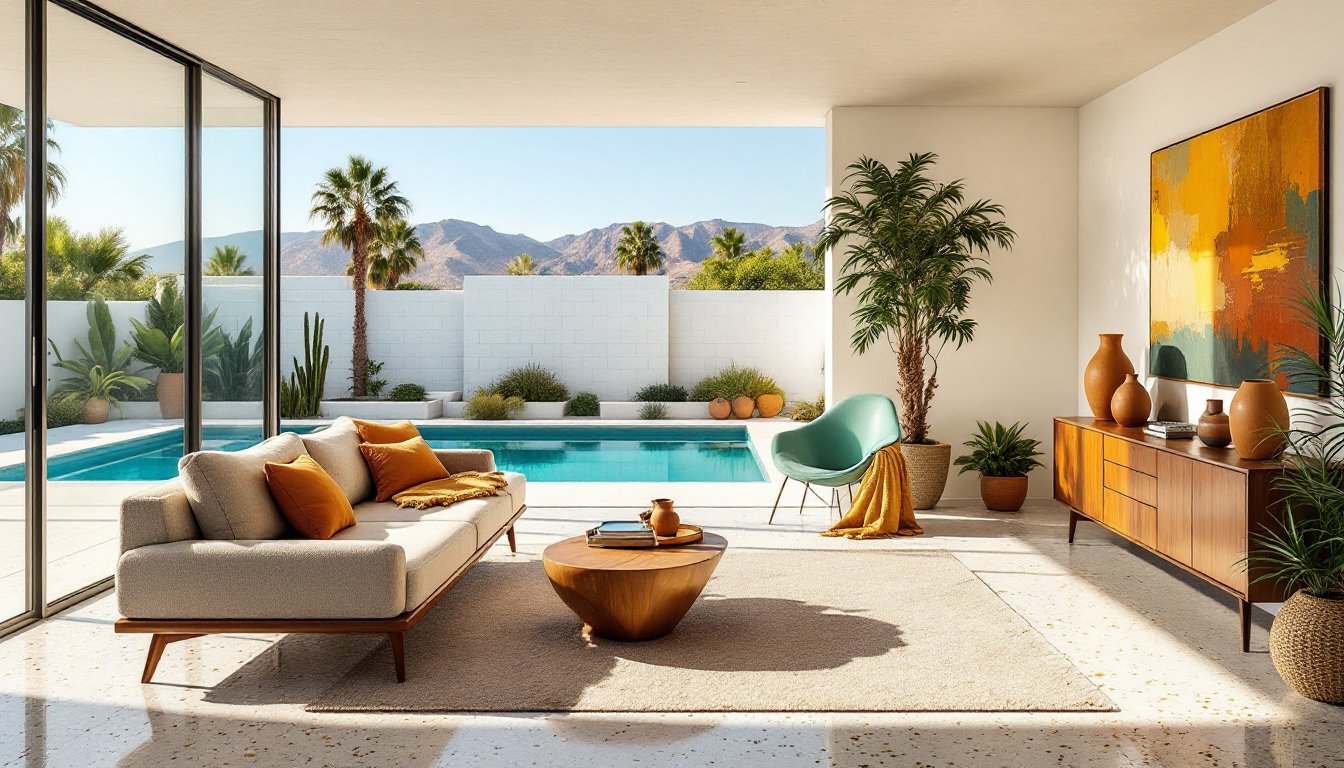

Palm Springs interior design has transcended its Southern California origins to become one of the most sought-after aesthetics in modern home design. This distinctive style emerged from 1950s and 60s modernist architecture, when legendary designers fled to the Coachella Valley to experiment with open floor plans, experimental materials, and a seamless blend of indoor and outdoor spaces. Today’s homeowners are drawn to its clean geometry, warm desert hues, and effortless sophistication. Unlike trend-driven styles that fade quickly, Palm Springs design has remained relevant for decades because it prioritizes livability alongside visual impact. This guide breaks down the core principles, specific materials, and practical installation considerations for bringing authentic desert modern style into any home.
Key Takeaways
- Palm Springs interior design merges 1950s-60s modernist principles with desert-specific climate solutions like breeze blocks, reflective materials, and horizontal lines that echo the flat desert landscape.
- Authentic palm springs interior design relies on floor-to-ceiling glass doors, large-format flooring, and transitional materials between interior and exterior spaces to dissolve boundaries and maximize natural light.
- Desert-inspired color palettes featuring warm terracotta, burnt sienna, ochre, turquoise, and soft neutrals are essential to capturing the landscape and creating visual harmony with the surrounding environment.
- Successful implementation requires mid-century modern furniture with tapered legs and clean lines, strategic lighting using warm white LEDs (2700K-3000K), and intentional accessorizing that prioritizes quality over quantity.
- Avoid common mistakes like mixing eras (farmhouse or bohemian elements), choosing wrong wood tones (orange oak instead of teak or walnut), and over-accessorizing, which diminish the airy, intentional aesthetic.
- Start palm springs design updates with flooring replacements, larger windows, and architectural details like breeze block accents rather than a full renovation, ensuring structural considerations like load-bearing walls are addressed.
What Makes Palm Springs Interior Design Unique?
Palm Springs design is rooted in mid-century modernism, but it’s distinguished by its response to a specific climate and landscape. The desert environment demanded innovative cooling solutions before central air conditioning became standard, which led architects to prioritize cross-ventilation, shaded overhangs, and reflective materials.
The style emphasizes horizontal lines that mirror the flat desert horizon and mountain ranges. Flat or low-pitched rooflines, long expanses of windows, and ground-hugging profiles create visual harmony with the surroundings. This differs from traditional mid-century modern homes in wetter climates, where pitched roofs and smaller windows were more common.
Material choices reflect both the desert setting and post-war experimentation. Breeze blocks (decorative concrete masonry units) became iconic for providing privacy while allowing airflow. Terrazzo flooring offered durability against sand and heat. Steel beams, exposed aggregate, and natural stone tied interiors to the rocky desert terrain.
The color philosophy stems directly from the landscape. Rather than the cooler grays and whites popular in coastal modernism, Palm Springs interiors lean into warm terracotta, burnt sienna, ochre, and sunset pink. These hues complement the surrounding sand, rock formations, and dramatic twilight skies. Pops of turquoise reference swimming pools, a defining feature of desert living.
Essential Elements of Palm Springs Style
Indoor-Outdoor Living and Floor-to-Ceiling Glass
The hallmark of Palm Springs design is the dissolution of boundaries between interior and exterior spaces. Floor-to-ceiling glass walls or sliding glass doors are non-negotiable for authentic desert modern style. These installations create sightlines to patios, pools, and mountain views while flooding interiors with natural light.
For DIYers tackling window replacements, note that single-pane glass won’t meet current energy codes in most jurisdictions. Specify low-E dual-pane glass with argon fills to meet IRC N1102 energy requirements while maintaining the visual openness. Standard patio door widths start at 6 feet, but 8- to 12-foot spans deliver the dramatic effect seen in classic Palm Springs homes.
Transitional flooring is critical. The same material, large-format porcelain tile, polished concrete, or terrazzo, should flow from inside to outside without a visible threshold change. This requires careful planning of floor heights during framing. Concrete slabs should be poured to match interior finished floor height, accounting for tile thickness (typically ⅜” to ½” for large-format tiles plus thinset).
Safety consideration: Floor-to-ceiling glass must be tempered or laminated safety glass per IRC R308, especially within 24 inches of doorways or below 18 inches from the floor. Mark glass with decals at eye level to prevent collisions.
Iconic Mid-Century Modern Furniture and Clean Lines
Palm Springs interiors showcase furniture with tapered wood legs, low profiles, and organic curves. The aesthetic balances geometric severity with human-scale comfort. Think teak credenzas, fiberglass shell chairs, and streamlined sofas with exposed walnut frames.
Authentic vintage pieces from designers like George Nelson, Paul McCobb, or Lane Furniture command premium prices, but quality reproductions are widely available. When selecting furniture, prioritize solid wood construction over veneer for longevity. Check that joinery uses mortise-and-tenon or dowel joints, not just staples or glue.
Upholstery should feature durable, fade-resistant fabrics. Desert sunlight is intense, solution-dyed acrylic fabrics (like Sunbrella) resist UV degradation better than cotton or linen, though they sacrifice some softness. For authentic texture, consider nubby bouclé, leather, or mid-weight linen blends treated with UV protectant spray.
Accessories follow a “less is more” philosophy. Display a curated collection of ceramics, sculptural objects, or vintage barware rather than crowding surfaces. Open shelving on steel brackets or teak wall-mounted units keeps sightlines clean.
Color Palettes That Capture the Desert Landscape
Palm Springs color schemes pull directly from the surrounding environment, creating spaces that feel cohesive with their setting. The foundation typically starts with warm neutrals, sand, beige, soft white, or greige, on walls and large surfaces.
Accent colors come from the desert’s natural drama. Terracotta, rust, burnt orange, and clay pink reference the earth and rock formations. Turquoise, aqua, and pool blue nod to the oasis culture of desert living. Ochre, mustard, and golden yellow capture the quality of desert light. Deep sage, olive, and dusty green bring in drought-tolerant vegetation like agave and creosote.
For paint application, the sheen matters. Flat or matte finishes on walls reduce glare in bright sunlight and emphasize the clean geometry of modernist spaces. Use satin or semi-gloss on trim and doors for durability and a subtle contrast. Exterior stucco is typically finished in warm whites or light sand tones to reflect heat.
One gallon of quality interior paint (like Benjamin Moore Regal Select or Sherwin-Williams Duration Home) covers approximately 350-400 square feet per coat. Most colors require two coats over properly primed drywall. For bold accent walls in terracotta or deep turquoise, plan on a high-hiding primer tinted to match the topcoat.
Pro tip: Test paint samples on multiple walls and observe them throughout the day. Desert light changes dramatically from morning coolness to harsh midday to golden hour, and colors will shift accordingly.
How to Incorporate Palm Springs Design Into Your Home
Bringing Palm Springs style into an existing home doesn’t require a gut renovation, but it does demand thoughtful updates to key elements.
Start with flooring. Replace carpet with large-format tile (24″×24″ minimum), polished concrete, or engineered hardwood in light to medium tones. If the existing subfloor is plywood, ensure it’s at least ¾” thick (or add ½” cement board) before tiling to prevent flexing and cracked grout joints.
Update doors and windows. Swap traditional panel doors for flush slab doors in wood veneer or painted finish. Replace small, divided-lite windows with larger picture windows or sliding units where wall framing allows. Consult a structural engineer before removing wall sections, many homes have load-bearing walls that require headers or beams (typically doubled 2×8 or engineered lumber, depending on span).
Rethink lighting. Palm Springs interiors favor globe pendants, Sputnik chandeliers, and geometric flush-mounts. Recessed can lights should be minimal and use warm white LEDs (2700K-3000K) to avoid the cold hospital feel of higher color temperatures. Install dimmer switches on all overhead lighting for flexibility.
Add architectural details. Breeze block installations make striking accent walls or room dividers. Standard 8″×8″×4″ concrete decorative blocks can be stacked dry (for non-structural applications) or mortared for permanence. This is a two-person job, each block weighs roughly 17 pounds.
Furniture placement matters. Anchor conversation areas with low-profile sectionals facing windows or fireplaces. Float furniture away from walls to create breathing room. Use area rugs in geometric patterns or natural fibers to define zones without chopping up the open floor plan.
Safety gear for DIY updates: Eye protection when cutting tile or concrete, respirator masks (N95 minimum) when sanding or working with thinset, gloves for handling masonry, and ear protection when using tile saws or circular saws.
Common Mistakes to Avoid When Designing Palm Springs Style
Even experienced DIYers stumble when translating Palm Springs design into practice. Here’s what to watch for:
Mixing too many eras. Palm Springs style is specifically mid-century modern, roughly 1945-1970. Don’t blend in farmhouse shiplap, industrial pipe shelving, or bohemian macramé. The aesthetic is clean and intentional, not eclectic.
Choosing the wrong wood tones. Palm Springs furniture features warm woods like teak, walnut, and rosewood, not the orange-toned oak or dark espresso finishes popular in other styles. If refinishing vintage pieces, use oil-based stains that enhance natural grain rather than heavy pigmented stains that obscure it.
Ignoring scale. Oversized sectionals and bulky furniture kill the airy, open feel. Measure carefully and choose pieces with visible legs and negative space beneath rather than skirted or solid-base designs.
Over-accessorizing. More isn’t better. A single statement piece, a large abstract painting, a sculptural floor lamp, or a vintage ceramic collection, carries more impact than cluttered shelves and gallery walls.
Skipping the outdoor connection. If floor-to-ceiling glass isn’t feasible, at least ensure window treatments don’t block views. Use sheer curtains, solar shades, or no window coverings on windows facing private yards. For street-facing windows, consider translucent panels or top-down/bottom-up shades that preserve light while providing privacy.
Neglecting climate control. The original Palm Springs homes relied on passive cooling, but modern comfort standards require HVAC. Ensure any new windows meet local energy codes, and consider exterior shading devices like metal awnings or deep overhangs to reduce heat gain.
Palm Springs interior design offers a timeless blueprint for homes that balance visual drama with everyday livability. By respecting its core principles, horizontal geometry, indoor-outdoor flow, warm desert tones, and restrained material choices, homeowners can create spaces that feel both historically grounded and completely contemporary.