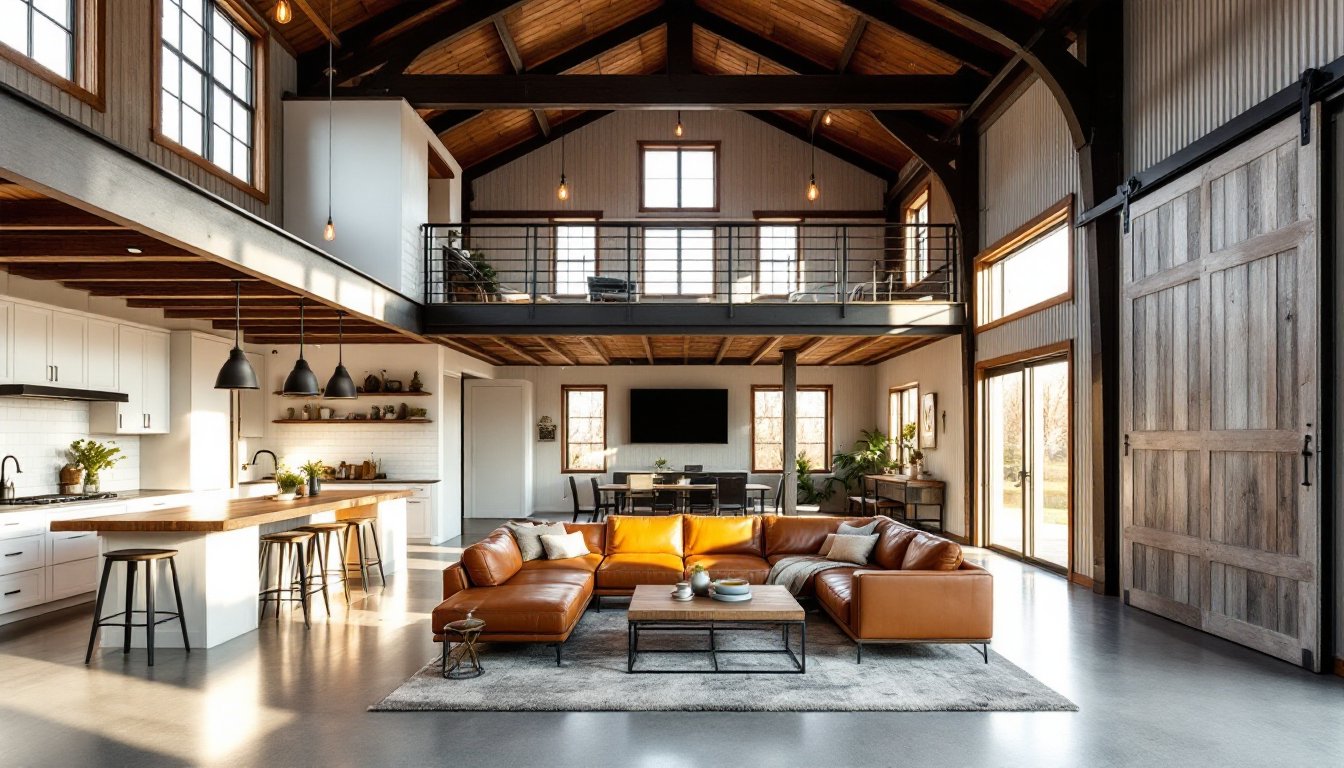

Barndominiums blend the wide-open utility of agricultural buildings with the warmth and function of residential living. What started as converted barns and metal pole buildings has evolved into purpose-built homes with soaring ceilings, exposed steel, and a design language that splits the difference between industrial and cozy. Getting the interior right means respecting that structural honesty while creating spaces people actually want to live in, no small task when you’re working with raw materials, open spans, and an aesthetic that can tip into sterile or overly themed if handled wrong.
Key Takeaways
- Barndominium interior design leverages structural elements like exposed beams and open spans as primary design features, requiring a zone-based approach rather than traditional room compartmentalization.
- Authentic material choices—concrete floors, reclaimed wood, blackened steel, and corrugated metal—honor the agricultural origins of barndominiums and work better than transplanted suburban finishes.
- Popular barndominium interior design styles include Modern Farmhouse, Industrial Minimalist, Rustic Contemporary, and Scandinavian-Inspired, each suited to different structural materials and personal aesthetics.
- Layered lighting with ambient, task, and accent fixtures is essential in barndominiums since single central fixtures cannot adequately illuminate high ceilings and open floor plans.
- Partial-height walls (42–48 inches), mezzanines, and strategic furniture placement define living zones while maintaining visual flow and light distribution across open spaces.
- Flooring options like polished concrete ($3–$8 per square foot) and luxury vinyl plank balance durability, aesthetics, and cost-effectiveness in barndominium environments.
What Makes Barndominium Interior Design Unique?
Unlike conventional stick-frame homes with compartmentalized rooms and predictable ceiling heights, barndominiums start with wide-open shells, often 30 to 60 feet wide with minimal interior load-bearing walls. The structure itself is the design feature: steel I-beams, post-and-beam timber frames, or truss systems that span the width of the building without intermediate support.
This structural openness creates both opportunity and challenge. There’s freedom to place walls, mezzanines, and lofts wherever needed, but also a risk of making spaces feel too cavernous or acoustically harsh. Interior designers and DIYers need to think in terms of zones rather than traditional rooms, using furniture placement, partial walls, and elevation changes to define areas for cooking, sleeping, and gathering.
Material palettes tend toward the raw and durable: concrete slab floors, corrugated metal accents, reclaimed wood, and blackened steel. These aren’t materials chosen for trend, they’re extensions of the building’s agricultural roots. The best barndominium interiors lean into that authenticity instead of fighting it with finishes that feel transplanted from a suburban tract home.
Essential Design Elements for Barndominium Interiors
Exposed Beams and Structural Features
Exposed beams aren’t decorative add-ons in barndominiums, they’re the skeleton holding the roof up. Glulam beams, solid-sawn timbers, or steel I-beams are typically left visible, and the interior design needs to account for their presence.
For wood beams, finishes range from clear polyurethane (to preserve natural color and grain) to matte black or charcoal stains that tie into metal accents. Avoid glossy finishes: they read as artificial under barndominium lighting. Steel beams can be left raw if properly primed and sealed, or painted in matte black or dark gray. If rust patina is desired, apply a clear topcoat to stabilize it and prevent staining on floors or fabrics below.
Beam spacing and depth affect sight lines and fixture placement. A beam running 16 feet above the floor might anchor a statement chandelier or ceiling fan, while lower beams, common in loft areas, may require recessed or track lighting to avoid head clearance issues.
Open Floor Plans and Space Optimization
Open floor plans are a given, but smart space planning prevents them from feeling like empty hangars. Start by anchoring major zones with large furniture pieces: a sectional sofa defines the living area, a kitchen island (ideally 8 to 10 feet long) establishes the cooking zone, and a dining table for six or more creates a gathering point.
Partial-height walls, think 42 to 48 inches, work well to separate spaces without blocking views or light. A half-wall clad in board-and-batten or reclaimed wood can divide a home office nook from the main living area while maintaining visual connection. Avoid full-height walls unless privacy is essential (bedrooms, bathrooms).
Mezzanines and lofts add usable square footage without expanding the building’s footprint. A second-story loft with an open rail overlooks the main living space and can serve as a bedroom, office, or lounge. Stair placement is critical, floating steel stairs with wood treads maintain the industrial aesthetic, while enclosed staircases feel out of place unless absolutely necessary for code compliance.
Building codes (IRC) require guardrails at loft edges to be at least 36 inches high, with balusters spaced no more than 4 inches apart. Use cable rail or metal rod systems to keep sight lines open.
Popular Barndominium Interior Design Styles
Modern Farmhouse leads the pack: shiplap accent walls, white or light gray paint, butcher-block countertops, and matte black hardware. It softens the industrial frame with cozy textiles, linen, cotton, wool, and limits the palette to neutrals with occasional navy or forest green.
Industrial Minimalist keeps things raw: polished concrete floors, exposed ductwork (if HVAC allows), steel-framed furniture, and Edison bulb fixtures. Color is restrained, grays, blacks, whites, with natural wood as the only warm note. This style works best in urban or loft-style barndominiums where the structure is steel-heavy.
Rustic Contemporary blends reclaimed barn wood with clean-lined furniture. Think a 12-foot salvaged barn door as a sliding partition, paired with a sleek leather sofa and geometric light fixtures. Textures matter here: rough-sawn beams, smooth plaster walls, and honed stone countertops create contrast without clutter.
Scandinavian-Inspired emphasizes light and simplicity. White walls maximize natural light from large windows, blonde wood (oak, ash, birch) keeps things warm, and minimal decor prevents visual overload. This approach works well in smaller barndominiums (under 1,500 square feet) where every element needs to pull double duty.
Choosing a style depends on the building’s structural material. Steel-framed barndominiums lean industrial or minimalist: timber-frame builds naturally suit rustic or farmhouse aesthetics.
Choosing the Right Materials and Finishes
Flooring: Polished concrete is durable, radiant-heat compatible, and cost-effective, figure $3 to $8 per square foot installed, depending on finish level. Stained or dyed concrete adds color without covering the surface. For warmth underfoot, luxury vinyl plank (LVP) mimics wood grain at a fraction of the cost and handles moisture better than hardwood. Actual hardwood (oak, maple, hickory) works in climate-controlled spaces but requires acclimation and may expand or contract in barndominiums with less insulation.
Wall Finishes: Drywall is standard and paintable, but consider leaving some walls as exposed metal panels or board-formed concrete for texture. Shiplap, tongue-and-groove pine, or reclaimed barn siding add warmth on accent walls, install horizontally for a traditional look or vertically to emphasize ceiling height. Prime and seal all wood to prevent insect issues and moisture absorption.
Countertops: Butcher block (edge-grain maple or walnut) suits farmhouse styles but requires regular oiling. Quartz offers durability and low maintenance in neutral tones. Avoid overly busy granite: it fights the minimalist aesthetic most barndominiums favor.
Cabinetry: Shaker-style cabinets in white, gray, or natural wood work across most styles. For industrial looks, consider open shelving with steel brackets and thick wood shelves (1.5 to 2 inches). Stain or paint should be matte or satin, high gloss feels wrong in these spaces.
Lighting Strategies for Barndominium Spaces
High ceilings and open plans create lighting challenges. A single central fixture won’t cut it, layered lighting is essential.
Ambient Lighting: Use large-scale fixtures proportional to ceiling height. A chandelier or pendant cluster with a 36- to 48-inch diameter works for 16- to 20-foot ceilings. Mount it 7 feet above the floor to avoid head clearance issues in traffic areas. Industrial cage pendants, wagon wheel chandeliers, or geometric metal fixtures fit the aesthetic.
Task Lighting: Install under-cabinet LED strips in kitchens (3000K to 4000K color temperature for neutral white). Over islands, use 2 to 3 pendants spaced evenly, common practice is one pendant per 24 to 30 inches of island length. In workshop or utility zones, 4-foot LED shop lights (linkable, 4000 lumens minimum) provide bright, even coverage.
Accent Lighting: Track lighting on exposed beams or along upper walls highlights architectural features. Wall sconces flanking barn doors or artwork add visual interest at eye level. Use dimmers wherever possible, they allow flexibility as natural light changes throughout the day.
Natural Light: Maximize it. Standard barndominium windows are often undersized for interior comfort. Consider adding sliding glass doors, clerestory windows along the roofline, or oversized barn-style windows. South-facing windows gather passive solar heat in winter, but budget for quality shades or blinds to manage summer heat gain.
All electrical work must meet National Electrical Code (NEC) standards. Junction boxes must support fixture weight, ceiling fans and heavy chandeliers require rated boxes fastened directly to structural framing, not drywall alone. Hire a licensed electrician for anything beyond fixture replacement if you’re not confident working with home wiring.