
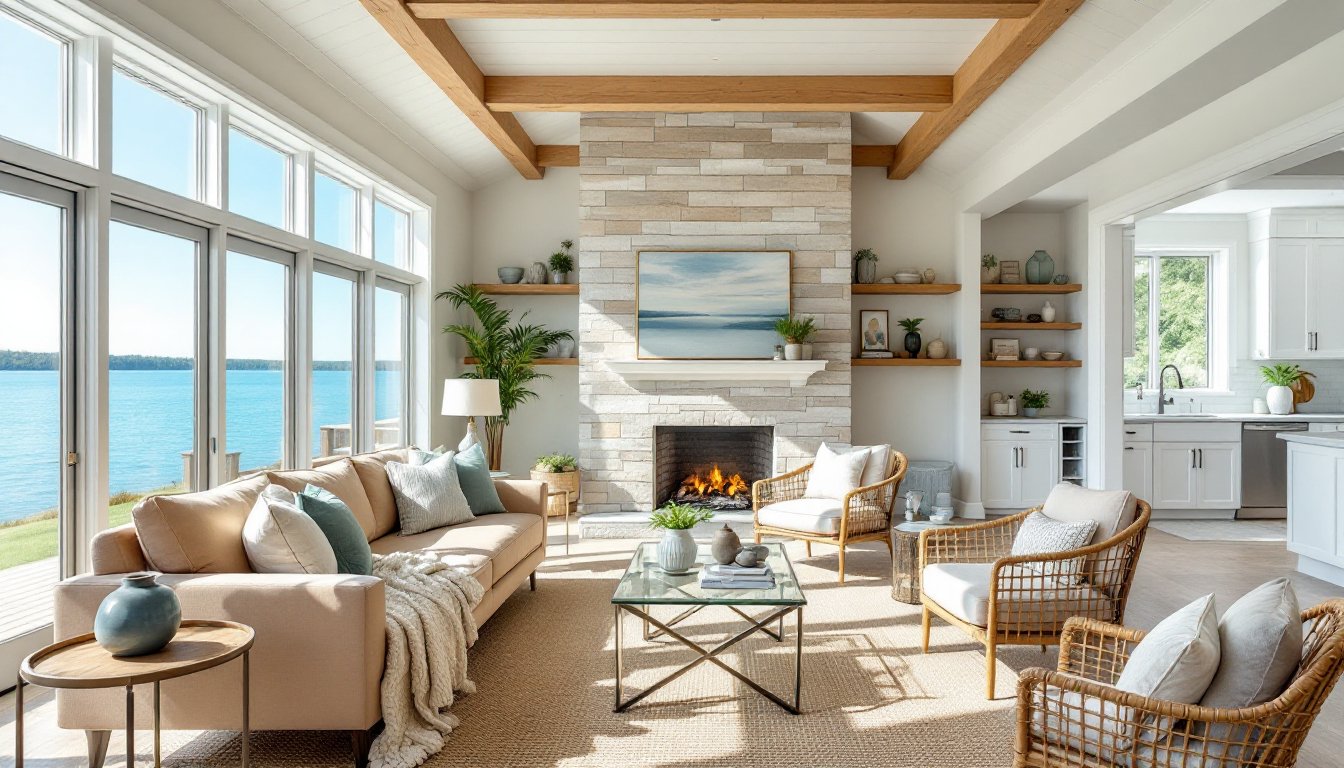

A lake house offers more than square footage and a dock, it’s a place to unwind, reconnect, and enjoy the view. Designing the interior requires balancing aesthetics with durability, since waterfront properties face moisture, humidity, and heavy foot traffic from sandy feet and wet gear. The right materials, layout, and color choices can amplify natural light, frame water views, and create inviting spaces that feel both polished and lived-in. These lake house interior design ideas focus on practical strategies for creating a comfortable retreat that stands up to seasonal use while making the most of the waterfront setting.
Key Takeaways
- Lake house interior design balances aesthetics with durability by using moisture-resistant materials like engineered hardwood, luxury vinyl plank, and porcelain tile to withstand humidity and wet conditions.
- Open floor plans with strategic window treatments that frame water views while managing glare create airy, light-filled spaces that showcase the waterfront setting without visual clutter.
- A calming, nature-inspired color palette of neutrals paired with muted blues and greens amplifies the relaxed vibe while letting the outdoor views remain the focal point.
- Comfortable gathering spaces with large sectionals, extended dining tables, and flexible secondary zones accommodate groups while performance upholstery resists stains and fading.
- Authentic nautical and rustic accents, used with restraint—such as reclaimed wood, vintage fishing rods, or driftwood mirrors—add personality without tipping into cliché.
Embrace Natural Materials and Textures
Wood, stone, and natural fiber finishes perform well in humid environments and visually anchor lakefront interiors. Reclaimed wood planks work for accent walls, ceiling beams, or shelving, bringing warmth without looking too polished. For flooring, engineered hardwood handles moisture swings better than solid wood, look for products rated for basements or high-humidity areas. Luxury vinyl plank (LVP) offers a waterproof alternative that mimics wood grain convincingly and stands up to wet bathing suits and sandy kids.
Stone or tile around fireplaces, entryways, and wet areas (mudrooms, bathrooms) adds texture and simplifies cleanup. Porcelain tile rated for floors resists staining and moisture better than natural stone, though slate and bluestone deliver an organic look if sealed properly. Pair hard surfaces with woven jute rugs, linen upholstery, or cotton canvas slipcovers, materials that breathe, age gracefully, and can be tossed in the wash or replaced affordably.
Avoid wall-to-wall carpeting in high-traffic or moisture-prone zones. If softness underfoot is a priority, use washable area rugs over hard flooring. Natural textures reinforce the connection to the outdoors and reduce the visual competition with the view outside the windows.
Create an Open and Airy Floor Plan
Waterfront homes benefit from sightlines that flow from the entry through to the water view. If the layout allows, removing non-load-bearing walls between the kitchen, dining, and living areas opens up the main level and lets natural light spread deeper into the interior. Before knocking down walls, consult a structural engineer or contractor, load-bearing walls require headers, footings, or posts to transfer weight safely, and permits are typically required.
If major demo isn’t feasible, widening doorways or replacing solid doors with French doors or barn-style sliders improves flow without structural changes. Pocket doors work well for spaces like pantries or powder rooms where a swinging door eats up valuable square footage.
Keep furniture low-profile and avoid overcrowding rooms. A sectional sofa arranged perpendicular to the windows preserves the view while defining the living area. Pair it with lightweight side chairs or ottomans that can be moved easily when hosting. Glass or acrylic coffee tables and open-leg consoles reduce visual bulk and maintain the airy feel. An open floor plan also simplifies entertaining, guests can move freely from the deck to the kitchen to the fireplace without navigating a maze of doorways.
Maximize Water Views With Strategic Window Treatments
Large windows bring in light and scenery, but bare glass can lead to glare, heat gain, and privacy issues. The goal is to frame the view without blocking it or adding visual clutter.
Cellular (honeycomb) shades in a light-filtering or sheer fabric diffuse harsh sun while maintaining outward visibility. Top-down/bottom-up mounting lets occupants lower the shade from the ceiling for midday glare control while keeping the lower portion open for the view. For wider expanses, motorized roller shades simplify operation and eliminate dangling cords, useful if windows are high or hard to reach.
If privacy isn’t a concern, skip treatments on view-side windows altogether and use valances or simple cornices for a finished look. On the opposite wall or bedroom windows, linen or cotton curtains in natural tones add softness without competing with the scenery. Mount rods as close to the ceiling as possible and extend them several inches beyond the window frame to make openings appear larger.
Avoid heavy drapes, ornate valances, or fussy tiebacks, they trap dust, block light, and look out of place in a casual waterfront setting. Exterior solutions like retractable awnings or pergolas with adjustable louvers can manage heat and glare without touching the interior sightlines.
Choose a Calming Color Palette Inspired by Nature
A cohesive color scheme amplifies the relaxed vibe of a lake house while letting the outdoor views remain the focal point. Start with a neutral base, off-whites, soft grays, warm taupes, or weathered driftwood tones, on walls and large furniture pieces. These shades reflect light, make rooms feel larger, and provide flexibility as accent colors change with seasons or trends.
Introduce muted blues, greens, or sandy beiges through pillows, throws, artwork, and smaller upholstered pieces. Think fog blue, sage, seafoam, or dusty aqua rather than saturated primaries. These tones reference water, sky, and shoreline without tipping into theme-park nautical.
For trim and cabinetry, semi-gloss or satin-finish paint in white or pale gray brightens spaces and stands up to cleaning. Darker accent walls, charcoal, navy, or forest green, can ground an open living area or add drama in a powder room, but use them sparingly to avoid shrinking the space.
Consider the direction and quality of natural light before committing to paint. North-facing rooms skew cooler and may need warmer neutrals (greige, cream) to avoid feeling sterile. South-facing spaces can handle cooler grays and blues without looking washed out. Test samples on multiple walls and observe them at different times of day, morning light, midday glare, and golden hour all shift color temperature noticeably.
Design Comfortable Gathering Spaces for Entertaining
Lake houses are meant for groups, family reunions, weekend guests, game nights by the fire. Design seating areas that accommodate conversation and flexibility.
A large sectional or L-shaped sofa anchors the main living space and seats more people than individual chairs. Pair it with a couple of lightweight armchairs or poufs that can shift from the fireplace to the deck as needed. Avoid fragile fabrics, performance upholstery (like Crypton, Sunbrella indoor collections, or tightly woven synthetics) resists stains, moisture, and fading while still looking residential.
Include a dining table that seats at least 8 to 10, even if daily use is smaller, holiday weekends and summer gatherings fill the space quickly. Extendable tables or those with removable leaves offer flexibility. Benches on one or both sides save space and seat kids or extra guests more easily than individual chairs.
Create secondary gathering zones: a window seat with storage underneath, a covered porch with ceiling fans and all-weather furniture, or a firepit area with Adirondack chairs. These overflow spaces keep the main interior from feeling cramped and take advantage of outdoor living when weather permits.
Storage is critical. Built-in benches with lift-top compartments, mudroom cubbies with hooks and boot trays, and closed cabinetry in living areas hide clutter from beach toys, fishing gear, life jackets, and firewood. Open shelving looks great styled with a few books and found objects, but it collects dust and visual noise if overloaded.
Incorporate Nautical and Rustic Accents
Subtle nods to the setting, oars mounted as wall art, rope-wrapped drawer pulls, vintage tackle boxes repurposed as storage, add personality without veering into cliché. The key is restraint and authenticity.
Reclaimed boat wood, vintage buoys, or weathered dock cleats work as functional or decorative elements if they look genuinely aged rather than artificially distressed. A single statement piece, a large driftwood mirror, a salvaged canoe hung from the ceiling, or a maritime chart framed in the hallway, grounds the space in its location more effectively than scattering anchors and seashells on every surface.
Rustic touches like exposed ceiling beams (real or faux), shiplap paneling, or barn doors blend well with lake house aesthetics, especially if the architecture leans traditional or farmhouse. Keep finishes natural or lightly stained rather than overly glossy. Metal accents, blackened steel, oil-rubbed bronze, or brushed nickel, suit the casual vibe better than polished chrome or ornate brass.
Be intentional about scale and placement. A collection of vintage fishing rods displayed horizontally above a doorway or a stack of old wooden crates used as a side table feels curated. A wall covered in netting, plastic fish, and lighthouse trinkets feels like a gift shop. Let the water view and natural materials do most of the thematic work, accents should support, not shout.
Conclusion
Designing a lake house interior comes down to balancing durability with comfort and letting the setting speak for itself. Choose materials that handle moisture, arrange spaces to frame views and accommodate guests, and keep the palette calm so the water and sky remain center stage. With thoughtful planning and a focus on practical details, a waterfront retreat becomes a space that’s as functional as it is inviting.