
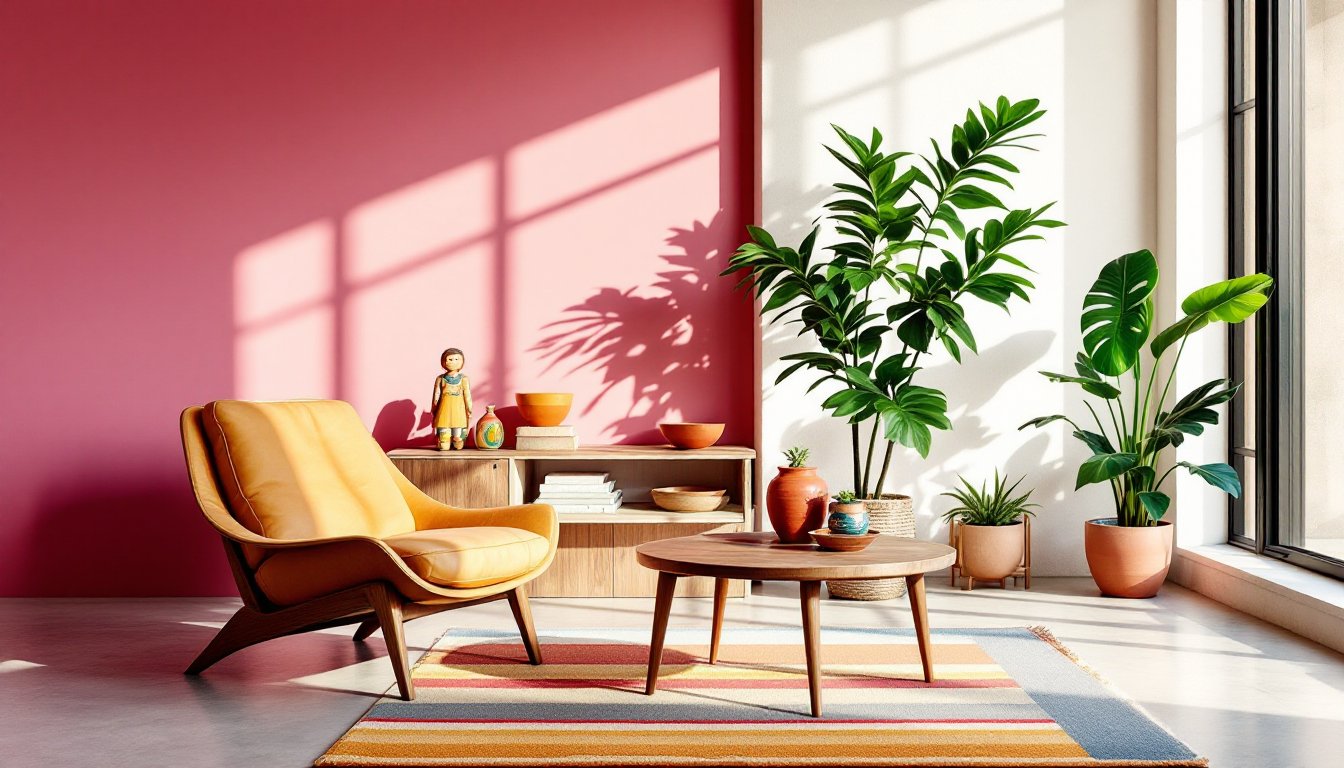

Mexico City’s design scene marries centuries-old craft traditions with cutting-edge contemporary aesthetics. The result is a style that’s unmistakably vibrant, one that layers saturated color, handmade textiles, and artisan materials into spaces that feel both grounded and alive. Unlike minimalist Scandinavian interiors or rustic farmhouse looks, Mexico City design leans into contrast: polished concrete against hand-painted Talavera tile, mid-century furniture beside folk art, raw wood beams over walls washed in electric pink. It’s bold without being chaotic, warm without feeling cluttered. For DIYers and renovators looking to break from neutral palettes and bring soul into their homes, this style offers a playbook rooted in craft, color theory, and cultural depth.
Key Takeaways
- Mexico City interior design blends bold saturated colors, handmade textiles, and raw materials inspired by Luis Barragán’s influential modernist approach, creating spaces that feel both sophisticated and lived-in.
- Signature materials like Talavera tiles, polished concrete floors, rough-sawn wood beams, and flat-weave textiles define the aesthetic and can be incorporated into existing homes through strategic updates.
- Color in Mexico City design thrives on confident, near-clashing combinations—such as pink with orange or teal with rust—applied at full saturation on entire walls rather than as accents.
- Layering artisan-made pieces with mid-century modern furniture and contemporary elements (like equipal chairs with sleek tables) creates intentional contrast that adds visual interest without requiring a designer’s expertise.
- Achieving this style doesn’t require renovation; start with one bold choice like a terracotta feature wall or Talavera tile accent and build layered, functional decor that avoids over-coordination and clutter.
- Authentic Mexico City interior design prioritizes handcrafted, functional objects and natural materials over trend-chasing, making it an accessible and rewarding approach for DIY homeowners seeking character and cultural depth.
What Makes Mexico City Interior Design Unique?
Mexico City interiors don’t follow a single blueprint. The aesthetic pulls from pre-Columbian influences, Spanish colonial architecture, and 20th-century modernism, particularly the work of architects like Luis Barragán and Ricardo Legorreta. What ties these threads together is a commitment to craft, color, and materiality over trends.
Barragán’s influence is critical. His use of monochromatic, saturated walls, fuchsia, cobalt, terracotta, set against natural light and raw textures became a visual language that still defines the city’s high-end residential projects. You’ll see it in contemporary homes: a single wall painted deep marigold yellow, paired with a polished concrete floor and a wooden beam ceiling.
Another hallmark is the integration of artisan work. Mexico City design doesn’t treat handmade objects as accessories, they’re structural. Talavera tiles aren’t just backsplashes: they’re architectural features. Woven textiles aren’t throw pillows: they’re upholstery, room dividers, or wall hangings that anchor a space.
Finally, there’s a layering of eras. A 1950s modernist chair might sit beside a rustic carved wood table and a contemporary steel shelving unit. The style doesn’t segregate old from new, it assumes they belong together, and the contrast creates visual interest without requiring a designer’s eye.
Essential Color Palettes in Mexico City Interiors
Color in Mexico City design isn’t timid. It’s applied in broad, confident strokes, often on entire walls rather than as accents.
Warm earth tones form the baseline: terracotta, ochre, burnt sienna, clay red. These shades reference the natural landscape and pre-Hispanic pottery. For a DIY application, consider terracotta or adobe-toned paints on a feature wall. Brands offering warm, mineral-based pigments (like those mimicking natural clay) give the most authentic finish. Pair with white or cream trim to keep it from feeling heavy.
Saturated jewel tones add drama. Cobalt blue, magenta, deep teal, and sunflower yellow appear frequently, often inspired by Barragán’s palette. These work best on a single accent wall or in a smaller room (powder bath, entryway) where the intensity won’t overwhelm. When painting, use flat or matte finishes to replicate the chalky, light-absorbing quality seen in Mexican interiors. High-gloss sheens look out of place here.
Neutrals aren’t boring. Whitewashed walls, raw plaster, and warm grays serve as breathing room between bold elements. They also highlight texture, something critical when you’re working with rough-hewn wood, woven textiles, or unglazed ceramics.
A common amateur mistake is over-coordinating. Mexico City interiors thrive on near-clashing color combinations, pink and orange, teal and rust, yellow and purple. The key is balancing saturation and scale: if one wall is deep magenta, the opposing wall might be soft white, and furniture can introduce a third, complementary hue.
Iconic Materials and Textures
Material choice defines this style as much as color. Mexico City interiors layer raw, handmade, and industrial materials in ways that feel both refined and unpretentious.
Talavera tile is the most recognizable element. These hand-painted ceramic tiles, traditionally made in Puebla, come in intricate geometric or floral patterns. They’re used on kitchen backsplashes, stair risers, bathroom walls, and even floors. For a DIY install, treat them like any ceramic tile: use thin-set mortar and a wet saw for cuts. Seal with a penetrating sealer if using in wet areas. Expect to pay $8–$15 per square foot for authentic Talavera: cheaper versions exist but often lack the hand-painted irregularities that give the material character.
Polished concrete floors are standard in modern Mexico City homes. They’re durable, cool underfoot (critical in warm climates), and pair well with textiles and wood. If pouring new concrete, consider integral color or a burnished finish for a softer look. Existing concrete slabs can be ground smooth and sealed with a matte or satin concrete sealer.
Rough-sawn or reclaimed wood appears in ceiling beams (vigas), furniture, and shelving. Unlike the sanded, stained lumber common in North American interiors, the wood here often retains saw marks, knots, and natural imperfections. For a similar effect, source reclaimed barn wood or skip the final sanding step on new lumber. A clear matte polyurethane or natural oil (like linseed or tung oil) protects without adding sheen.
Woven textiles, wool rugs, cotton throws, serapes, introduce softness and pattern. Oaxacan rugs, with their bold stripes and natural dyes, are a staple. When sourcing, look for flat-weave construction, which works better on hard floors than high-pile options.
Furniture and Decor Styles That Define the Look
Mexico City interiors mix artisan-made pieces, mid-century modern furniture, and contemporary design without rigid style rules.
Equipal chairs, those low-slung, barrel-shaped seats made from pigskin and wood, are iconic. They’re comfortable, durable, and age well. For sourcing, check import retailers or artisan co-ops: expect $150–$300 per chair. They pair unexpectedly well with sleek, modernist tables.
Mid-century modern pieces from designers like Clara Porset or international names (Eames, Saarinen) show up frequently. The style’s clean lines and organic forms complement rather than compete with artisan craft. A simple wooden Parsons table or a molded plywood chair works as a neutral anchor.
Carved wood furniture, especially pieces with geometric or folk motifs, adds texture. Look for mesquite or parota wood, both native to Mexico and known for rich grain patterns. Avoid over-finishing: a hand-rubbed oil or wax finish preserves the wood’s natural character.
For decor, prioritize handmade and functional objects: ceramic bowls (not just decorative, use them), woven baskets, punched-tin light fixtures, and folk art like alebrijes or retablos. Display them grouped rather than scattered: a shelf of mismatched pottery reads as intentional, while one lonely vase on a mantel looks like an afterthought.
Greenery is non-negotiable. Large-scale plants, fiddle leaf figs, monstera, potted palms, bring life and soften hard surfaces. Terracotta pots (unglazed, natural finish) are the default container.
How to Bring Mexico City Design Into Your Space
Translating this aesthetic to a North American home doesn’t require a gut renovation. Strategic updates, color, texture, and a few key pieces, can shift the feel dramatically.
Start with paint. Choose one room (kitchen, dining room, bedroom) and commit to a bold wall color. Terracotta, ochre, or deep teal are safer entry points than magenta, but don’t default to beige. Use two coats of a quality paint with good pigment load, cheaper paints require more coats and never reach full saturation. Prep is critical: patch holes, sand, prime if going from dark to light or vice versa.
Next, address flooring and materials. If replacing tile, consider a Talavera or cement tile accent area, kitchen backsplash, entryway, or powder room floor. Cement tiles (similar aesthetic, different production method) are more widely available in the U.S. and often less expensive. Both require sealing. If you’re keeping existing floors, add texture with a large flat-weave rug in bold stripes or geometric patterns.
Swap out light fixtures. Punched-tin pendants or lanterns, available from import retailers or online, cost $50–$200 and make an immediate impact. Install is straightforward if you’re replacing an existing fixture, turn off the breaker, disconnect the old fixture, match wires (black to black, white to white, ground to ground), and secure the new mounting bracket.
Introduce wood and handmade elements. A reclaimed wood shelf, a carved wooden mirror frame, or a set of ceramic dishware adds materiality without major construction. Shop artisan markets, import stores, or online co-ops that work directly with Mexican craftspeople.
Blending Traditional and Contemporary Elements
The real skill in Mexico City design is balancing old and new without tipping into theme-park territory. A few guidelines:
- Anchor with modern structure: If your furniture is mostly contemporary (clean lines, minimal ornamentation), you have more latitude to layer in folk art, textiles, and bold color.
- Let one element dominate: If the walls are saturated color, keep furniture simple. If you’re using intricate Talavera tile, tone down the wall color.
- Avoid matchy-matchy sets: Mix wood tones, chair styles, and ceramic patterns. Uniformity flattens the aesthetic.
- Edit ruthlessly: This style is rich, but it’s not cluttered. Every object should earn its place. If a room feels chaotic, remove rather than rearrange.
Don’t shy from contrast. A polished concrete floor under a rough wood table, a sleek steel shelf holding handmade pottery, these juxtapositions are the point, not a problem to solve.
Conclusion
Mexico City interior design offers a practical alternative to the safe neutrals and trend-chasing that dominate much of residential decor. It’s rooted in craft, unafraid of color, and built on the assumption that homes should feel lived-in, not staged. For DIYers, the style rewards hands-on work, painting bold walls, installing artisan tile, sourcing real materials, and doesn’t demand perfection. Start with one confident choice, whether that’s a terracotta accent wall or a set of Talavera tiles, and build from there.