
Finding the right storage solution in Spokane doesn’t have to feel like guessing. Whether it’s clearing out a garage before a remodel, stashing seasonal gear, or bridging the gap between homes, residents need space that’s secure, accessible, and priced fairly. Spokane’s storage market has evolved significantly, climate-controlled units are more common, pricing varies widely by neighborhood, and facility features range from basic drive-up access to 24/7 surveillance and coded entry. This guide walks through the types of storage available, how to evaluate facilities, where to look across the city, what costs to expect, and how to use every cubic foot efficiently.
Key Takeaways
- Storage solutions in Spokane range from basic 5’×5′ self-storage units at $40–$75/month to climate-controlled spaces at $60–$100/month, with larger units accommodating full households available for $150–$280/month.
- Climate-controlled storage protects temperature-sensitive items like wood instruments, vinyl records, and electronics by maintaining temperatures between 55°F and 80°F, adding 15–30% to monthly rent but preventing costly damage from Spokane’s weather extremes.
- North Spokane and Spokane Valley offer the best facility density with competitive pricing and modern amenities, while West Spokane provides lower rates for long-term storage without frequent access needs.
- Evaluate facilities by checking security features (perimeter fencing, surveillance, keypads), cleanliness, pest control measures, access hours that match your schedule, and verifying gate entry compatibility before committing to a lease.
- Maximize storage space by using uniform stackable boxes, disassembling furniture, installing vertical shelving, maintaining an access aisle, and keeping an inventory with photos for insurance purposes and efficient retrieval.
- Read lease terms carefully to understand late fees, rate increase policies, lien procedures, and promotional rate durations, as Washington State allows facility auctions after 60–90 days of unpaid rent.
Types of Storage Solutions Available in Spokane
Spokane storage facilities offer configurations to match everything from a few boxes to a workshop’s worth of tools. Knowing the distinctions helps narrow the field fast.
Self-Storage Units
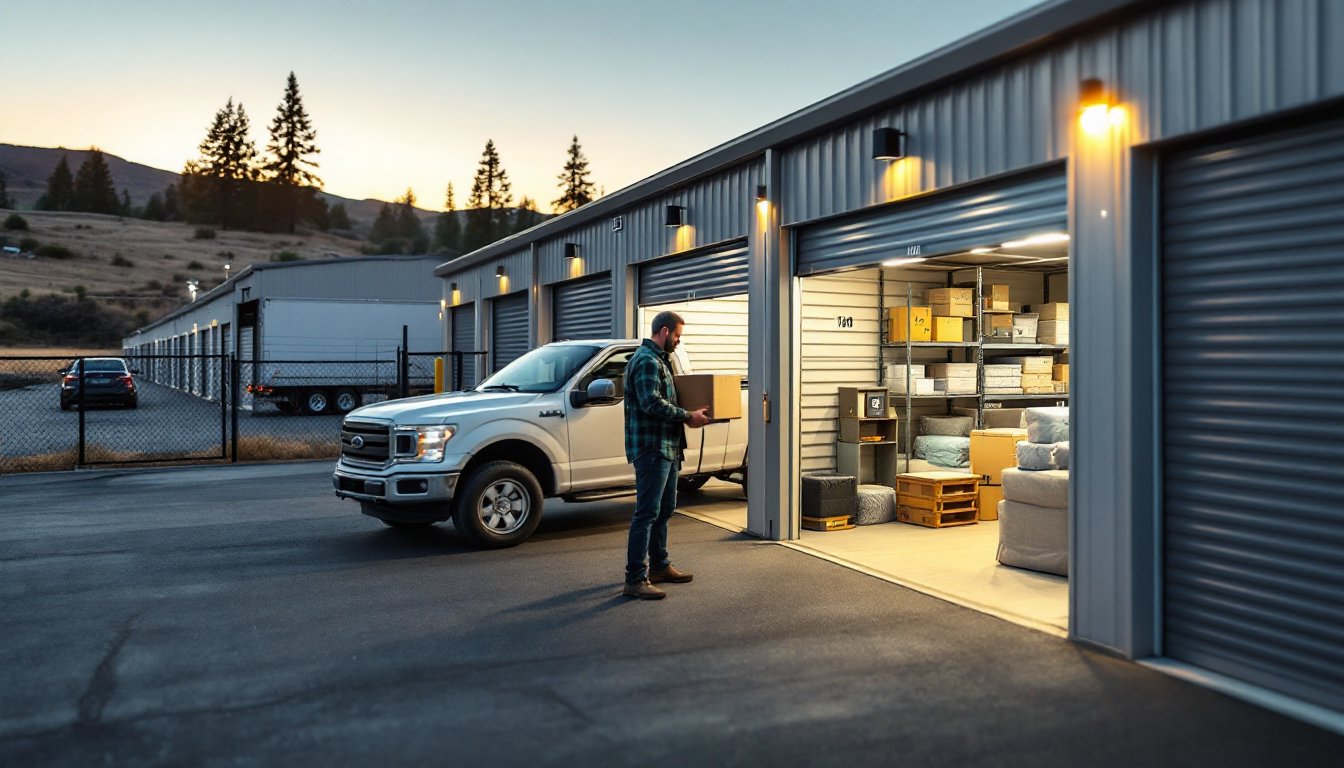
Self-storage units are the most common option, individual lockable spaces rented by the month. Sizes typically range from 5’×5′ (about a closet, good for boxes and small furniture) to 10’×30′ (fits a multi-bedroom household or vehicle). Access formats vary: drive-up units let renters back a truck directly to the door, simplifying heavy loads, while interior units require navigating hallways but often come with better climate control and security.
Most Spokane facilities use roll-up metal doors. Some newer builds offer wide aisles and taller ceilings (10′ or higher), useful for vertical shelving or stacking kayaks and lumber. Standard lease terms are month-to-month with 30-day notice, though some facilities discount longer commitments. Renters supply their own lock: disc locks resist bolt cutters better than standard padlocks.
Climate-Controlled Storage
Climate-controlled units maintain temperature and humidity within a set range, usually between 55°F and 80°F, with relative humidity capped around 55%. Spokane’s weather swings from winter lows near 20°F to summer highs past 90°F, with dry conditions year-round. That variability can warp wood furniture, crack leather, degrade photographs, or cause electronics to condensate when temperatures shift.
Climate control adds 15–30% to monthly rent compared to standard units, but it’s worth it for items sensitive to temperature extremes: wood instruments, vinyl records, upholstered furniture, documents, and anything with finish work. These units are almost always interior spaces with conditioned hallways. If storing power tools, paint, or solvents, check facility rules, many prohibit flammables or require vented cabinets even in climate-controlled spaces.
How to Choose the Right Storage Facility in Spokane
The cheapest unit isn’t always the best deal. A few factors separate a solid facility from one that becomes a headache.
Location and access hours matter more than most people think. A facility 15 minutes farther away saves $20/month but costs more in gas and time if someone needs frequent access. Look for facilities with gate access hours that match the schedule, some offer 24/7 entry, others close at 9 PM or restrict weekend hours. If storing tools for an ongoing project, restricted hours become a barrier.
Security features vary widely. Baseline expectations include perimeter fencing, individually alarmed units, and recorded video surveillance. Better facilities add keypads at multiple checkpoints, motion-sensor lighting, and on-site management during business hours. Ask if the property is fenced on all sides and whether cameras cover the unit’s specific location, not just entry points.
Cleanliness and maintenance are tells for how a facility operates. Walk the aisles before signing anything. Check for pest control measures (bait stations, sealed gaps), functional lighting, and intact doors. Water stains on walls or ceilings indicate roof leaks, a red flag for any storage, especially climate-controlled.
Insurance requirements are standard. Most facilities mandate proof of contents insurance, either through a renter’s homeowner policy or purchased on-site. On-site policies are convenient but often more expensive than adding a rider to an existing homeowner’s or renter’s policy. Read coverage limits carefully: some cap claims at $2,000–$5,000.
Finally, read the lease terms. Month-to-month is standard, but confirm late fees, rate increase policies, and lien procedures. In Washington State, facilities can auction contents if rent goes unpaid for a specified period, usually 60–90 days. Some facilities lock renters into promotional rates for only three months before jumping to standard pricing.
Top Neighborhoods and Areas for Storage in Spokane
Spokane’s storage options cluster in specific areas based on zoning, land availability, and access to major routes.
North Spokane (around Division Street and Highway 2) hosts several large facilities with competitive pricing and easy freeway access. This area sees consistent availability in standard and climate-controlled units. It’s a good zone for residents in Mead, Wandermere, or anyone heading north frequently.
Spokane Valley (near Sprague Avenue and Argonne Road) has dense storage facility concentration, often newer construction with upgraded features like coded gate access and LED lighting. Proximity to I-90 makes this convenient for eastside residents or those moving to/from Idaho. Pricing here tends to run middle-of-the-road.
West Spokane (around Sunset Boulevard) offers fewer facilities but generally lower rates due to less commercial density. Access can be slightly less convenient depending on exact location, but for long-term storage where frequent trips aren’t needed, the savings add up.
Downtown and South Hill have limited options due to space constraints and zoning. The facilities that exist tend to be smaller, older, and pricier per square foot. But, for someone without a vehicle or working downtown, proximity might justify the cost.
Rural areas just outside Spokane (Cheney, Liberty Lake) sometimes offer outdoor vehicle and RV storage at lower rates, though amenities and security are typically scaled back. These work well for boats, trailers, or campers that don’t fit in standard units.
Pricing and Costs: What to Expect in Spokane
As of 2026, Spokane storage pricing reflects regional growth and demand but remains more affordable than Seattle or Portland.
Small units (5’×5′ to 5’×10′) typically run $40–$75/month for non-climate-controlled and $60–$100/month for climate-controlled. These handle seasonal clothing, sports equipment, or a few pieces of furniture.
Medium units (10’×10′ to 10’×15′) range from $90–$150/month standard, $120–$190/month climate-controlled. A 10’×10′ fits a one-bedroom apartment’s contents: 10’×15′ handles a small two-bedroom.
Large units (10’×20′ to 10’×30′) cost $150–$280/month without climate control, $200–$350/month with it. These accommodate full households, workshop setups, or multiple vehicles.
Vehicle and RV storage varies by covered vs. uncovered. Uncovered outdoor spots run $30–$60/month: covered parking is $75–$150/month: enclosed units for RVs or boats can reach $200–$400/month depending on size.
Pricing fluctuates with location, occupancy rates, and promotional periods. Facilities near highways or in high-demand areas charge premiums. Many offer first-month discounts (sometimes 50% off or $1 for month one) but revert to standard rates afterward, factor that into budgeting.
Additional costs include locks ($10–$25 for a decent disc lock), insurance ($10–$20/month if purchased on-site), and occasional admin or reservation fees ($10–$30 one-time). Some facilities charge for truck rentals or after-hours access.
Tips for Maximizing Your Storage Space
Efficient packing turns a 10’×10′ into usable space instead of a pile of regret.
Use uniform boxes when possible. Banker boxes or plastic totes with lids stack cleanly and protect contents better than mismatched cardboard. Label all sides, not just tops, so boxes are identifiable from any angle. Clear totes let renters see contents without opening.
Disassemble furniture to save vertical and horizontal space. Remove table legs, break down bed frames, and take doors off cabinets. Wrap disassembled parts together with stretch wrap and label hardware in ziplock bags taped to the piece.
Build vertically with sturdy shelving. Freestanding metal shelves (like wire racks rated for 200–350 lbs per shelf) double usable space by getting items off the floor. Place heavier boxes on lower shelves, lighter or less-used items up top. Anchor tall units to prevent tipping, some facilities require this for safety.
Create an aisle. Don’t pack wall-to-wall. A 2–3′ center aisle allows access to items in back without unpacking the entire unit. Place frequently accessed items near the door.
Protect against moisture and pests, even in climate-controlled units. Use plastic sheeting under mattresses and upholstered furniture. Avoid cardboard for long-term storage of fabric, it attracts pests. Desiccant packs (silica gel) help in non-climate-controlled units, especially for tools or metal items prone to rust.
Don’t store prohibited items. Most facilities ban flammables (gasoline, propane, paint thinner), perishables, hazardous waste, and anything illegal. Storing a lawnmower is usually fine if the gas tank is emptied and dry. Check the lease for the full list, violations can void insurance and lead to eviction.
Finally, keep an inventory list with photos. If filing an insurance claim or just remembering what’s in box #47, documentation saves time and proves value.