
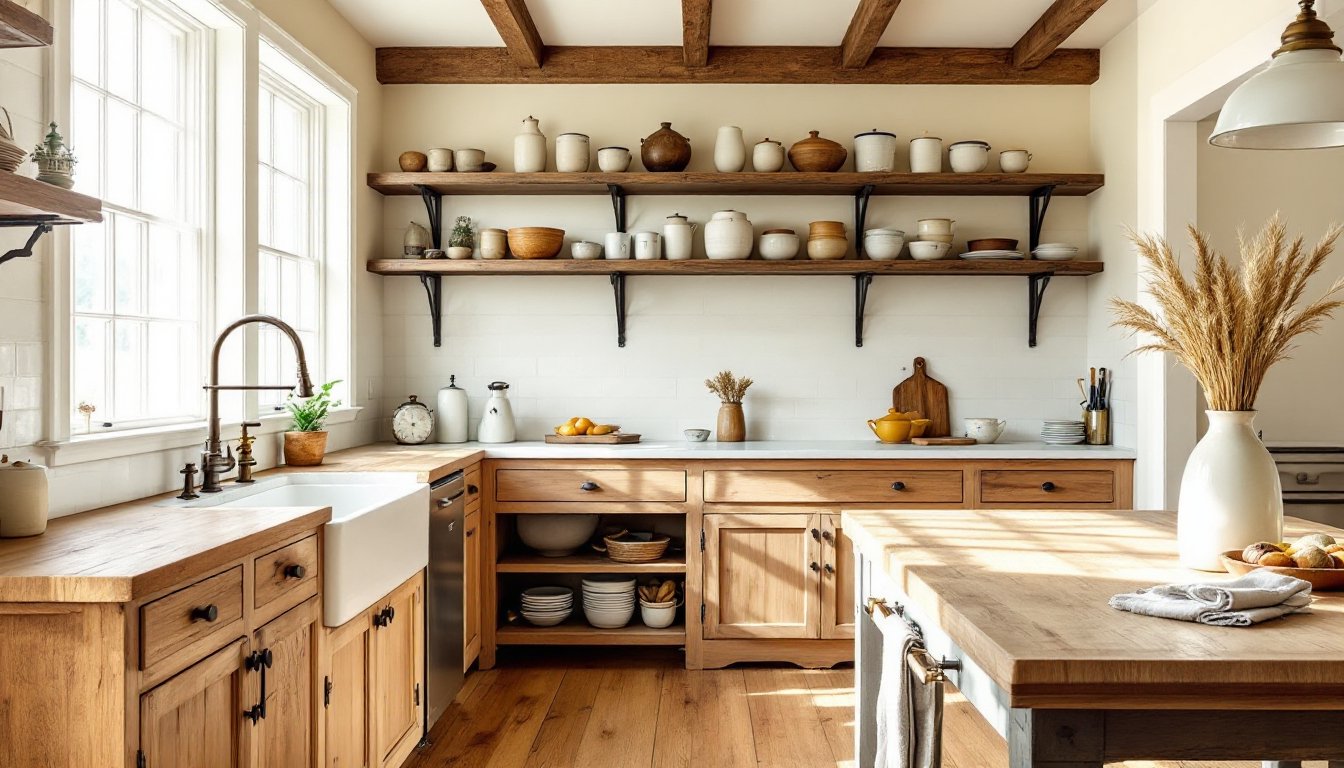

Traditional farmhouse interior design offers a warm blend of function and nostalgia that turns any house into a comfortable retreat. Rooted in the practical needs of rural living, this aesthetic celebrates natural materials, honest craftsmanship, and lived-in simplicity. Unlike modern farmhouse trends that lean heavily on staged minimalism, traditional farmhouse style embraces the patina of age, worn wood floors, salvaged fixtures, and furniture built to last generations. Whether renovating a century-old cottage or retrofitting a suburban ranch, homeowners can layer in these design principles with deliberate material choices and spatial planning that respects the style’s heritage.
Key Takeaways
- Traditional farmhouse interior design prioritizes authentic materials and honest craftsmanship over staged minimalism, featuring reclaimed wood, natural stone, and heirloom-quality furniture built to last generations.
- Create an authentic color palette using warm, sun-faded tones like soft whites, greige, barn red, sage green, and dusty blues—avoiding stark builder-grade whites and cool coastal grays that undermine the rural aesthetic.
- Invest in solid wood construction and period-appropriate fixtures: wide-plank flooring ($6–$12 installed per sq ft), oil-rubbed bronze hardware, and schoolhouse lighting rather than ornate or ultra-modern alternatives.
- Farmhouse interior design succeeds by repurposing functional objects as decoration—cast-iron cookware, enamelware, stoneware crocks, and quilts—while avoiding mass-produced faux-vintage signs and Instagram-focused trends.
- Apply traditional farmhouse principles room-by-room with practical elements like apron-front sinks in kitchens, substantial coffee tables in living rooms, and beadboard wainscoting in bathrooms that reflect genuine household needs.
What Defines Traditional Farmhouse Interior Design?
Traditional farmhouse design emerged from agricultural necessity, where every room served multiple functions and durability outweighed decoration. The aesthetic centers on unpretentious practicality: wide-plank floors that could handle muddy boots, deep sinks for washing produce, and open shelving for easy access to daily dishware.
Key architectural features include exposed structural elements like ceiling beams (actual load-bearing timbers, not decorative box beams), shiplap or beadboard wall treatments, and casement or double-hung windows with divided lights. Rooms typically flow into one another without excessive hallways, a layout born from heating efficiency in homes heated by wood stoves.
Unlike contemporary farmhouse styles that favor stark white walls and industrial metals, traditional versions embrace warmer, earthier tones and oil-rubbed bronze or blackened iron hardware. The look feels collected over time rather than curated from a single shopping trip, with mismatched chairs around a harvest table or a mix of open and closed storage reflecting genuine household needs.
Essential Color Palettes for Farmhouse Interiors
Traditional farmhouse palettes draw directly from the landscape and natural pigments available in the 19th and early 20th centuries. Start with a neutral base of soft whites, warm creams, or greige (gray-beige hybrids) on walls and trim. These shades reflect natural light in rooms that originally relied on fewer, smaller windows.
Accent colors lean toward muted, dusty tones rather than saturated brights:
- Barn red (iron oxide-based reds with brown undertones)
- Sage green or faded moss
- Dusty blue or slate gray
- Ochre yellow or butter cream
- Warm gray with taupe or brown base notes
Woodwork often appears in its natural state, unstained pine or oak with a clear coat, or painted in the same off-white as the walls to simplify the palette. Avoid stark, builder-grade white (which reads too modern) and cool grays with blue undertones (which feel coastal rather than rural). The goal is a palette that looks like it’s been gently sun-faded over decades, not freshly painted yesterday.
Key Materials and Textures That Create Authentic Farmhouse Style
Material authenticity drives traditional farmhouse interiors more than any other design element. Reclaimed wood remains the foundational texture, whether as flooring, ceiling treatments, or accent walls. Look for wide-plank pine or oak (8″ to 12″ face width) with visible knots, nail holes, and color variation. New lumber can work if it’s rough-sawn or wire-brushed to add texture, but smooth, uniform planks undermine the aesthetic.
For flooring, actual tongue-and-groove hardwood (¾” thick) performs better long-term than engineered alternatives, especially in high-traffic areas. Expect to pay $6–$12 per square foot for solid oak or hickory, installed, though prices vary by region and grade.
Natural stone and ceramic tile appear in kitchens and entryways. Subway tile (3″ × 6″) works for backsplashes, but hex tile (1″ hexagons) or unglazed terracotta suits the period better. Countertops lean toward soapstone, butcher block, or honed marble, materials that develop patina rather than trying to look perpetually new.
Textile textures include:
- Linen for curtains and slipcovers (wrinkles are a feature, not a flaw)
- Cotton ticking stripe for upholstery
- Wool rugs in simple patterns or solid colors
- Burlap or jute as utilitarian accents
Avoid anything too polished, high-gloss finishes, laminate surfaces, and synthetic fabrics all clash with the style’s handmade roots.
Furniture Choices That Embody Farmhouse Character
Traditional farmhouse furniture prioritizes solid wood construction over veneers or particleboard. Pieces should feel substantial, tables with 2″ thick tops, chairs with mortise-and-tenon joinery, cabinets with dovetailed drawers. Styles borrow from American country furniture traditions: Windsor chairs, ladder-back side chairs, trestle tables, and pie safes with punched-tin panels.
Seating often mixes bench seating with individual chairs around a dining table, a practical solution when family size fluctuated with seasonal farmhands. Upholstered pieces feature simple silhouettes, rolled-arm sofas, slipcovered armchairs, or button-tufted ottomans, in neutral fabrics that can handle daily use.
Storage furniture leans toward open shelving, hutches, and freestanding cupboards rather than built-in cabinetry. A tall step-back cupboard (upper section narrower than the lower) serves as both pantry storage and display space. Farm tables remain the centerpiece, look for pine, oak, or maple construction with turned or tapered legs and a scrubbed finish that shows use.
When sourcing furniture, antique stores and estate sales often yield better finds than big-box retailers. If buying new, skip distressing techniques that look artificial (chain marks, excessive sanding through paint) and instead choose well-built pieces that will age honestly over time. A $400 solid-oak table from a local craftsman will outlast a $600 pre-distressed import.
Decorative Elements and Accessories for Traditional Farmhouse Rooms
Farmhouse accessories stem from functional objects repurposed as decoration. Ironware, cast-iron skillets, trivets, or hooks, hangs on walls or open shelves. Enamelware (white with colored rims) works for canisters or utensil crocks. Stoneware crocks and pottery in neutral glazes add texture without clutter.
Lighting fixtures should reference early electrification or pre-electric sources: schoolhouse pendants with milk glass shades, wrought-iron chandeliers, or repurposed kerosene lamp bases. Avoid ornate crystal or ultra-modern LED strips. Exposed Edison bulbs work only if the fixture itself feels period-appropriate.
Textile accents include:
- Quilts (patchwork or whole-cloth designs) as wall hangings or bed toppers
- Rag rugs or braided wool runners
- Grain sack pillows (striped linen-cotton blends)
Wall décor stays minimal and meaningful. A single large piece, a vintage farm map, a portrait in an antique frame, or a simple wooden sign with hand-lettered text, carries more weight than a gallery wall of mass-produced prints. Botanical elements like dried herbs, cotton stems, or wheat sheaves add seasonal texture without leaning into saccharine “farmhouse chic” territory.
Avoid: mass-produced metal signs with faux-vintage slogans, excessive use of the word “gather,” and anything that prioritizes Instagram appeal over actual function.
Room-by-Room Application of Farmhouse Design Principles
Kitchen: Center the space around a large farmhouse sink (fireclay or cast iron, 30″–36″ wide, apron-front). Pair with a gooseneck faucet in oil-rubbed bronze or unlacquered brass. Use open shelving on at least one wall, actual wood brackets supporting 2″ thick shelves, not wire racks. A butcher block island (minimum 1½” thick maple) provides workspace and informal seating. Floor should be wide-plank wood or large-format stone tile: skip luxury vinyl plank if possible.
Living Room: Arrange seating around a wood-burning fireplace or stove if the home supports it (check local codes and chimney requirements). Use a substantial coffee table, a refurbished door on sawhorses, a trunk, or a plank-top design with visible joinery. Layer a jute or wool area rug (8′ × 10′ minimum for typical living rooms) over hardwood. Window treatments should be simple linen panels or matchstick blinds, not heavy drapery.
Bedroom: A metal bed frame (wrought iron or brass, not painted tubular steel) or a simple wooden bed with a headboard made from reclaimed barn siding anchors the space. Use cotton or linen bedding in white, cream, or ticking stripe. A single nightstand or a small table serves better than matching bedroom sets. Keep the floor clear of rugs in smaller rooms: in larger spaces, a small braided rug beside the bed adds warmth.
Bathroom: Install beadboard wainscoting (3″ to 4″ boards with a modest bead profile) to chair-rail height. Use a pedestal sink or a vanity made from a repurposed dresser with an undermount porcelain sink. Walls above the wainscot should be painted in warm white or pale gray. Fixtures in brushed nickel or oil-rubbed bronze maintain consistency.
Conclusion
Traditional farmhouse design succeeds when every choice reflects intentional simplicity and respect for materials. It’s not about buying a farmhouse aesthetic off the shelf, it’s about understanding why wide-plank floors, open shelving, and worn finishes existed in the first place, then adapting those principles to modern living without losing their functional soul. Start with one room, focus on quality over quantity, and let the space develop character naturally over time.