
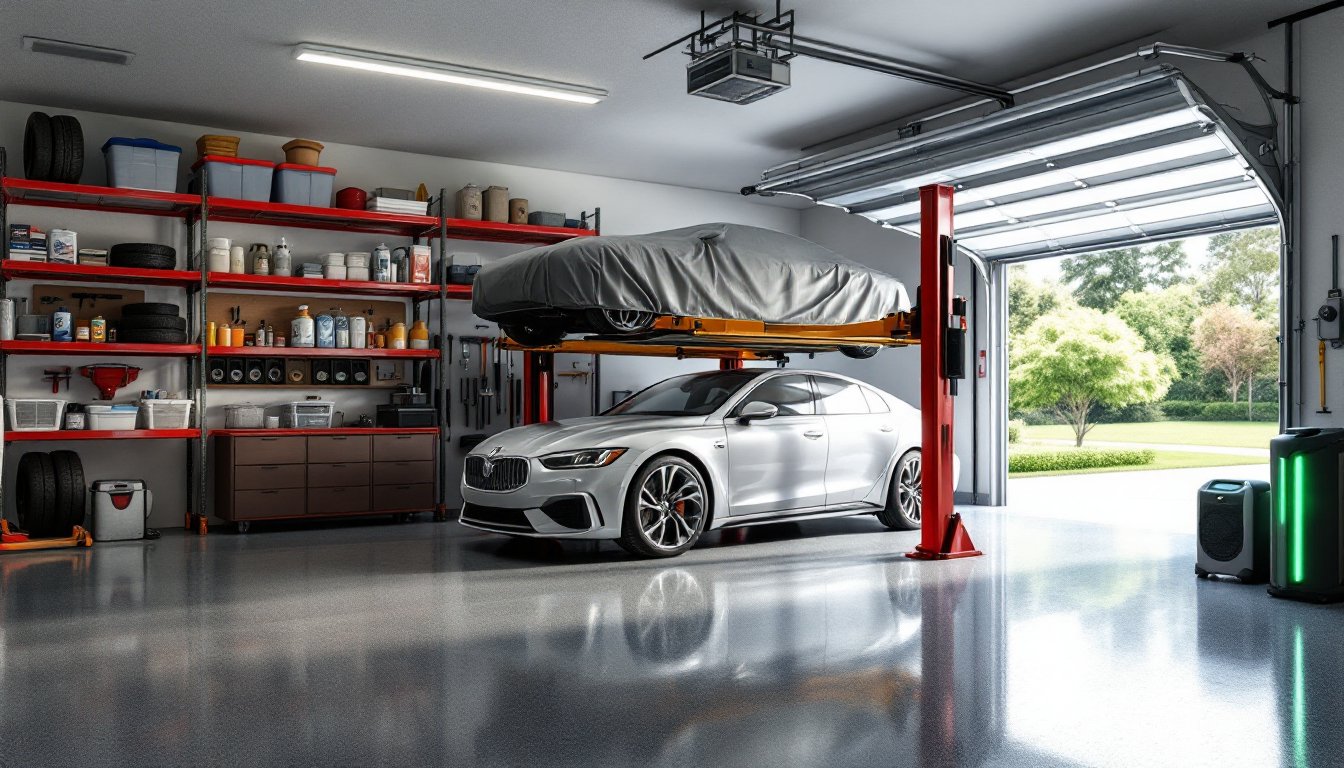

Whether it’s a classic car, a seasonal convertible, or just a daily driver that needs shelter, proper vehicle storage protects thousands of dollars in automotive investment. Poor storage accelerates rust, damages paint, invites rodents, and kills batteries. Smart storage solutions, from garage setups to outdoor shelters, extend vehicle life, preserve resale value, and keep cars ready to roll. This guide walks through indoor and outdoor storage options, essential organizing accessories, long-term prep protocols, and how to match solutions to local climate and available space.
Key Takeaways
- Proper car storage solutions protect automotive investment by preventing rust, paint damage, battery degradation, and rodent damage, which costs $300–$600 per incident on average.
- Indoor storage with humidity below 50–60% and climate control (50–70°F) is ideal for vehicle longevity; garages should feature vapor barriers, epoxy coatings, and insulated doors (R-16 to R-18.4 values).
- Outdoor car storage options like metal carports ($800–$2,500) and custom-fit car covers ($50–$300) provide cost-effective protection, while portable garages ($300–$1,200) suit temporary seasonal storage.
- Long-term vehicle storage exceeding 30 days requires fuel stabilizer, oil changes, tire pressure adjustments to maximum PSI, battery tenders, and rodent-blocking measures in air intakes and exhausts.
- Climate-specific storage approaches matter: UV-resistant covers for hot climates, snow-rated carports (30+ psf) for cold regions, and dehumidifiers for humid coastal areas prevent location-specific damage.
- Storage space organization with overhead racks (600-lb capacity), wall-mounted shelving, and tire racks maximizes efficiency while protecting wheels from flat-spotting and keeping tools accessible.
Why Proper Car Storage Matters for Vehicle Longevity
Cars left exposed to the elements age faster. UV radiation fades paint and cracks dashboards. Moisture promotes rust in wheel wells, undercarriages, and door seams, especially in coastal or humid regions. Temperature swings cause seals to harden and fluids to degrade.
Indoor storage mitigates most of these issues, but only if humidity stays below 50-60%. Damp garages can trap condensation on cold metal surfaces, accelerating corrosion. Installing a dehumidifier rated for garage square footage helps, particularly in basements or unheated spaces.
Rodents are another threat. Mice nest in air filters, chew wiring insulation, and clog exhaust pipes with bedding material. Repair bills for rodent damage average $300-$600 per incident. Sealed storage or use of ultrasonic repellers and peppermint-soaked cotton balls near wheel wells reduces risk.
Battery health also suffers during inactivity. A trickle charger or battery tender (typically 1.5-2 amps) maintains charge without overloading, preventing sulfation that kills lead-acid batteries. This is critical for vehicles stored more than two weeks.
Indoor Car Storage Options: Garages and Beyond
A standard two-car garage (20′ × 20′) fits two compact sedans with minimal clearance. For storage plus workspace, 24′ × 24′ or larger works better. When building or renovating, consider 10′ ceilings to accommodate lifts or overhead storage racks.
Concrete floors should have a vapor barrier beneath the slab to prevent moisture wicking. Existing slabs benefit from epoxy or polyurea coatings, which seal pores and simplify cleanup of oil drips. Surface prep, grinding or acid-etching, is essential: skip it and coatings peel within months.
Climate-controlled garages maintain 50-70°F year-round, ideal for collectibles or leather interiors. Insulating garage doors (R-16 to R-18.4 values) and walls (R-13 to R-21 fiberglass batts in 2×4 or 2×6 framing) cuts HVAC costs. A mini-split heat pump offers efficient heating and cooling without ductwork.
For urban dwellers without garages, private storage units (10′ × 20′ climate-controlled) run $150-$400/month depending on location. Verify the facility allows auto storage, some prohibit it due to fire codes or fluid leaks. Always use a battery tender and check tire pressures monthly, as unheated units still experience temperature fluctuations.
Pole barns and detached sheds (12′ × 20′ minimum for one vehicle) offer budget alternatives. Use pressure-treated sill plates on gravel or concrete pads, and install metal roofing (29-gauge steel or aluminum) for durability. Local building codes often require permits for structures over 120-200 sq ft: check zoning rules before construction.
Outdoor Car Storage Solutions for Every Budget
When indoor space isn’t available, outdoor solutions range from basic covers to semi-permanent structures. The key is balancing protection, portability, and budget.
Carports (metal or wood-framed, 12′ × 20′ footprint) shield vehicles from sun and precipitation while allowing airflow that prevents condensation. Prefab steel carport kits cost $800-$2,500 and install on concrete pads or anchored gravel. Upgrade to enclosed sides in high-wind or snow-load regions, verify the frame is rated for local weather (e.g., 20-30 psf snow load in northern climates).
Portable garages (fabric over tubular steel frames, 10′ × 20′) offer temporary protection for $300-$1,200. These work for seasonal storage but degrade in UV exposure after 2-3 years. Anchor them with auger anchors or concrete blocks: wind can collapse unanchored frames. Ventilation is poor, so avoid use in humid climates without adding vents or leaving end panels partially open.
Portable Car Covers and Shelters
Car covers are the most affordable option, ranging from $50-$300 depending on material and fit. Custom-fit covers protect better than universal sizes, which can flap and abrade paint.
- Polyester covers (3-5 layers) resist UV and light rain but aren’t waterproof. Best for garaged cars needing dust protection.
- Polypropylene or solution-dyed acrylic covers handle full outdoor exposure, with waterproof coatings and breathable layers to prevent mold.
- Reflective or silver-coated covers reduce heat buildup in sunny climates, preventing interior damage.
Always use soft inner linings (fleece or cotton) to avoid scratching paint. Secure covers with elastic hems, grommets, and tie-down straps, loose covers act like sandpaper in wind. Never cover a wet car: trapped moisture accelerates rust.
For convertibles or classics, consider inflatable car capsules ($1,500-$4,000), which create a sealed, climate-controlled bubble. A small fan maintains positive pressure and dry air, ideal for long-term indoor storage in unheated spaces.
Essential Accessories for Organizing Your Car Storage Space
Efficient storage means more than just parking the car, it’s maximizing vertical space and keeping tools, tires, and fluids organized.
Overhead storage racks (4′ × 8′ platforms, 600-lb capacity) mount to ceiling joists (typically 16″ on center). Use lag bolts (3/8″ × 3″ minimum) into solid wood, not drywall anchors. Store seasonal tires, car care supplies, or camping gear overhead. Verify joist span and load ratings: sagging ceilings indicate undersized framing.
Wall-mounted shelving (16-gauge steel, 24″ deep) holds oil, antifreeze, and detailing products. Install french cleats or heavy-duty brackets into studs for loads over 50 lbs per shelf.
Tire racks (stackable or wall-mounted) prevent flat-spotting and keep floors clear. Store tires vertically if mounted on rims, horizontally stacked (max 4 high) if unmounted. Clean and dry tires before storage to prevent dry rot.
Pegboards or slatwall panels (4′ × 8′ sections) organize hand tools, extension cords, and microfiber towels. Metal pegboard is more durable than tempered hardboard and supports heavier items.
Jack stands (3-ton minimum for most sedans and light trucks) relieve suspension and tire stress during long-term storage. Place them under manufacturer-specified jack points, consult the owner’s manual. Never rely on a floor jack alone: it can leak down over time.
Long-Term Storage: Preparing Your Vehicle for Extended Periods
Storing a vehicle for more than 30 days requires prep beyond simply parking it. Skipping steps leads to dead batteries, stale fuel, and seized brakes.
Fuel system: Fill the tank to 90-95% capacity and add fuel stabilizer (1 oz per 2.5 gallons). Run the engine for 10 minutes to circulate treated fuel through injectors and lines. A full tank prevents condensation: overfilling risks expansion in heat.
Oil change: Old oil contains combustion acids that corrode engine internals. Change oil and filter before storage, even if mileage hasn’t reached the interval.
Tire pressure: Inflate to the maximum PSI listed on the tire sidewall (not the door placard). This reduces flat-spotting. Better yet, use jack stands to take weight off the suspension entirely.
Battery: Disconnect the negative terminal to prevent parasitic drain, or connect a battery tender. Lead-acid batteries self-discharge at roughly 5% per month: a dead battery sulfates and loses capacity permanently.
Coolant and brake fluid: Verify both are fresh and at proper levels. Moisture in brake fluid can corrode calipers and lines during inactivity.
Exhaust and air intake: Stuff steel wool or foam plugs in the tailpipe and air intake to block rodents. Remove before starting the engine.
Interior: Crack windows 1/4 inch (if stored indoors in a secure space) to allow airflow and prevent mildew. Place moisture-absorbing desiccant packs on seats and floors. Remove food, trash, and anything that attracts pests.
Wash and wax: Clean the car thoroughly, including the undercarriage. Apply a coat of carnauba or synthetic wax to protect paint. Avoid parking on dirt or grass, which traps moisture underneath.
Choosing the Right Storage Solution Based on Climate and Location
Local weather and space dictate which storage methods work best. A solution that protects a car in Arizona may fail in Maine.
Hot, arid climates (Southwest US): UV damage is the primary concern. Indoor storage or reflective car covers prevent paint fade and cracked dashboards. Carports work well if oriented to minimize afternoon sun exposure. Concrete pads should be sealed to prevent dust infiltration. Ventilation is critical, fully enclosed fabric shelters can trap heat above 150°F in summer.
Cold, snowy regions (Northern US, Canada): Snow load and road salt demand robust structures. Use metal carports rated for 30+ psf snow loads and pitched roofs (4:12 slope minimum) to shed accumulation. Wash undercarriages before storage to remove salt. Heated garages prevent freeze-thaw cycles but require ventilation to avoid carbon monoxide buildup if the car is started indoors.
Humid, coastal areas (Southeast, Gulf Coast): Rust prevention is paramount. Indoor storage with dehumidifiers is ideal. Outdoor covers must be waterproof yet breathable to prevent mold. Elevate storage on gravel or raised pads to improve drainage. Inspect frequently for mildew and corrosion.
Urban environments (apartments, condos): Off-site climate-controlled storage units are often the only option. Choose facilities with 24/7 access, security cameras, and insurance requirements. Alternatively, car storage services (valet-style, $200-$600/month) offer pickup, storage, and maintenance in metro areas.
Space-constrained properties: Car lifts (two-post or four-post, $2,000-$5,000 installed) double parking capacity in single garages. Requires 12′ ceilings and professional installation to meet safety standards. Always verify floor slab thickness (minimum 4″ reinforced concrete) before installing a lift.