
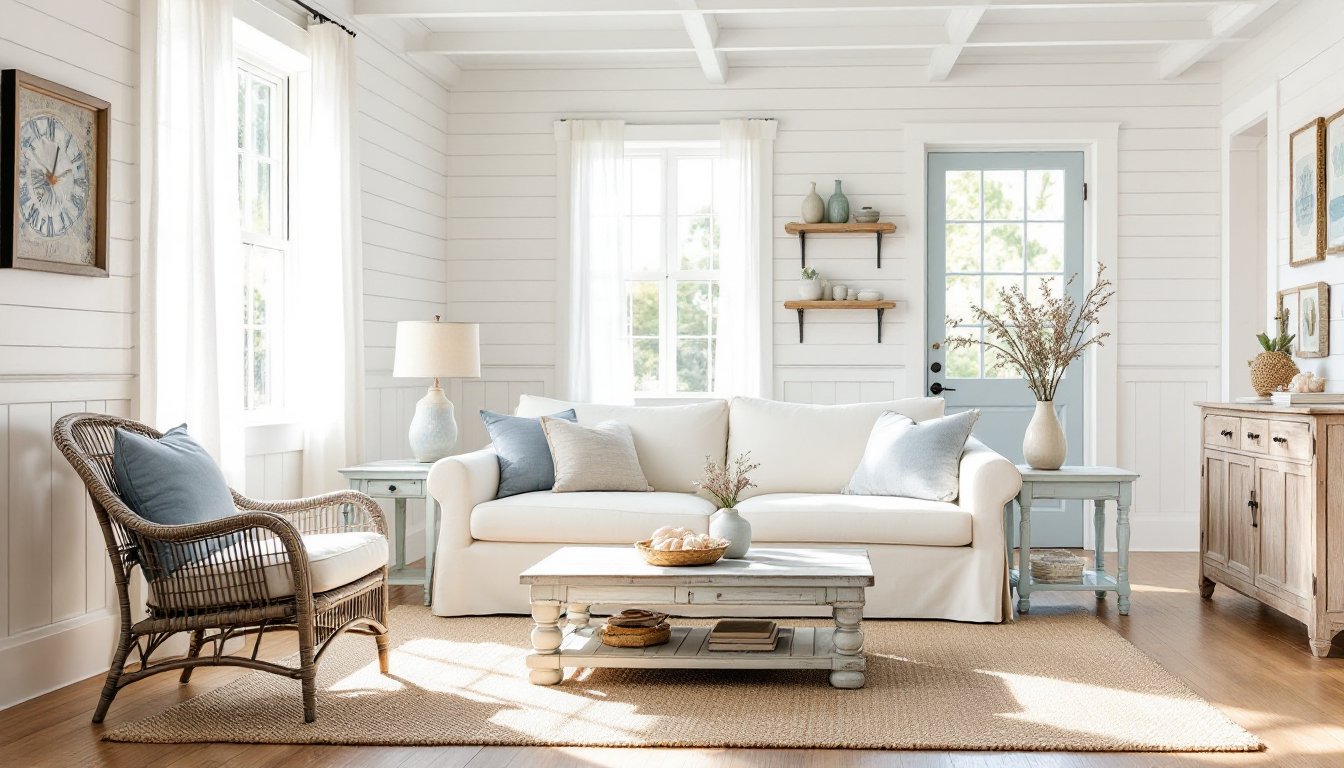

Coastal cottage interior design captures the laid-back charm of seaside living without the salt spray and beach erosion. It’s a style that balances weathered character with functional comfort, think shiplap that’s actually structurally sound, not just glued to drywall for Instagram. Whether renovating a small beach cottage or bringing ocean vibes to a landlocked ranch house, this approach prioritizes natural materials, smart color choices, and durability over fussiness. This guide walks through the practical elements that create authentic coastal cottage interiors, from paint finishes that hold up to humidity to furniture layouts that maximize small floor plans.
Key Takeaways
- Coastal cottage interior design prioritizes durable, natural materials and weathered finishes that handle humidity and real-world wear, making it ideal for any home—not just beachfront properties.
- Use warm whites with subtle gray or beige undertones (like Benjamin Moore White Dove) as your base, then layer with faded blues, greens, and soft sand tones rather than bright, saturated colors.
- Invest in high-quality wood furnishings, slipcovered sofas in washable fabrics, and weathered or painted pieces that feel collected over time instead of matching formal sets.
- Apply satin or semi-gloss paint finishes in moisture-resistant formulations to walls in high-humidity areas, and keep window treatments minimal with linen or cotton panels to maximize natural light.
- Incorporate authentic coastal cottage style through simple natural objects like collected driftwood and beach glass, layered textiles in neutral tones, and open shelving rather than heavy cabinetry to maintain an airy, intentional feel.
What Makes Coastal Cottage Style Unique?
Coastal cottage style blends the informal comfort of cottage design with materials and colors borrowed from coastal environments. Unlike formal coastal styles that lean heavily on nautical motifs or beach house designs built around expansive ocean views, coastal cottage interiors work in smaller spaces with modest budgets.
The style evolved from actual working cottages near shorelines, structures that needed to handle humidity, sand, and salty air while remaining cozy during off-season months. Modern interpretations keep that practical foundation. Surfaces are easy to clean. Fabrics resist fading and mildew. Furniture stands up to damp swimsuits and sandy feet.
Key characteristics include:
- Layered whites and blues that mimic sky, sand, and water without literal beach murals
- Weathered or painted wood that looks naturally aged, not artificially distressed with chains and screws
- Casual, unmatched furniture rather than formal sets
- Open, airy layouts that maximize natural light and cross-ventilation
- Vintage or salvaged elements mixed with functional modern pieces
This isn’t a style that requires beach proximity or a six-figure renovation. It translates well to small beach cottage interior design projects, urban apartments, or suburban homes where homeowners want a relaxed, unfussy atmosphere that still feels intentional.
Essential Color Palettes for Coastal Cottage Interiors
Coastal cottage palettes pull from nature, specifically, the washed-out tones of driftwood, sea glass, and overcast skies. These aren’t the saturated jewel tones of tropical design but softer, weathered hues.
Base whites and neutrals form the foundation. Avoid stark, cool whites like pure titanium white. Instead, opt for warm whites with subtle gray or beige undertones, Benjamin Moore’s White Dove or Sherwin-Williams’ Alabaster work well. These read as crisp in bright light but don’t feel sterile in smaller rooms.
Blues and greens should feel faded, not vibrant. Think weathered navy, dusty teal, or sage rather than cobalt or kelly green. For trim and cabinetry, consider soft blue-grays like Sherwin-Williams’ Sea Salt or Benjamin Moore’s Palladian Blue. These shift tone throughout the day, adding depth without demanding attention.
Accent colors include warm sand tones, soft coral (used sparingly), and driftwood gray. Introduce these through textiles, painted furniture, or a single accent wall rather than committing entire rooms.
Paint finish matters. In high-humidity areas or actual coastal locations, use satin or semi-gloss finishes on walls and trim. Flat paint absorbs moisture and shows water marks. For ceilings, a moisture-resistant flat or matte finish in white helps reflect light without glare. If working on small beach cottage interior design where moisture is a real concern, consider mildew-resistant paint formulations (most major brands offer them) for bathrooms and kitchens.
Natural Materials and Textures That Define the Look
Coastal cottage interiors rely heavily on natural, tactile materials that age gracefully and handle humidity better than synthetics.
Wood is the primary material. Shiplap, beadboard, and tongue-and-groove planking add texture to walls and ceilings. If installing new planking, 1×6 or 1×8 pine boards (actual dimensions 3/4″ x 5.5″ or 7.25″) work for most applications. Paint or whitewash them to let grain show through. For flooring, wide-plank oak, pine, or reclaimed wood in lighter stains or painted finishes hold up better than laminate and can be refinished.
Avoid over-distressing. A few dings and worn edges look natural: deliberate gouges look forced.
Woven natural fibers add warmth. Jute, seagrass, and sisal rugs are durable and hide sand better than plush carpets, though they can be scratchy underfoot, layer a softer cotton rug on top in seating areas. For window treatments, linen or cotton curtains in white or natural tones soften hard surfaces without blocking light. Avoid heavy, lined drapes.
Wicker and rattan furniture fit the aesthetic but choose well-constructed pieces. Check that joints are screwed or bolted, not just glued. Natural rattan darkens over time: painted wicker (white or soft blue) hides wear better.
Stone and ceramic provide cool contrast. Subway tile, sea glass tile, or simple white ceramic tile suits kitchens and baths. For countertops, butcher block, soapstone, or white quartz aligns better with the style than busy granite.
Keep metal finishes simple: brushed nickel, oil-rubbed bronze, or matte black for hardware and fixtures. Polished chrome and brass feel too formal unless they’re vintage pieces with patina.
Furniture Choices for an Authentic Coastal Cottage Feel
Coastal cottage furniture should feel collected over time, not purchased as a matching set. The goal is comfortable, functional pieces with character.
Slipcovered sofas and chairs are foundational. Washable cotton or linen slipcovers in white, natural, or ticking stripe handle spills and pet hair. Choose pieces with sturdy hardwood frames, avoid particleboard or soft pine that won’t hold up. Deep seats and overstuffed cushions add comfort but take up floor space: in tight layouts, consider scaled-down loveseats or armless settees.
Painted or weathered wood furniture fits the style better than dark, formal pieces. A distressed white dresser, a pale blue nightstand, or a salvaged wood coffee table adds texture. If painting existing furniture, lightly sand glossy finishes, prime with a bonding primer (Zinsser B-I-N or similar), and finish with two coats of satin or eggshell paint. For a weathered look, sand edges after painting to expose underlying wood or previous paint layers.
Wicker, rattan, and bentwood seating works indoors and out. Look for pieces with cushions in weather-resistant fabric if they’ll see heavy use. Avoid flimsy import pieces, quality wicker should feel solid and have some weight.
Open shelving and glass-front cabinets replace heavy closed cabinetry, especially in kitchens. Floating shelves in reclaimed wood or painted brackets keep spaces feeling airy. In bathrooms, pedestal sinks or open vanities take up less visual space than bulky cabinets.
Vintage or secondhand finds add authenticity. Thrift stores, estate sales, and salvage yards turn up painted dressers, wooden benches, and mismatched dining chairs that fit the aesthetic better than anything new. Just inspect for structural soundness, wobbly joints or cracked wood need repair before use.
Decorative Elements and Accessories to Complete Your Space
Accessories in coastal cottage interiors walk a fine line between charming and kitschy. The goal is subtle nods to seaside life, not a souvenir shop.
Textiles layer in softness. Striped cotton throws, linen pillow covers, and lightweight quilts in whites, blues, and natural tones add comfort. Skip decorative pillows with embroidered anchors or sayings, solid colors and simple patterns (ticking stripe, gingham, linen weave) age better.
Natural objects beat mass-produced décor. Driftwood pieces, a bowl of shells (collected, not purchased in bags), beach glass in a jar, or a piece of coral add organic interest. Display them simply, clustered on a shelf or as a centerpiece, not scattered across every surface.
Mirrors and glass amplify light in smaller spaces. A large mirror with a weathered wood or rope-wrapped frame brightens dim corners. Avoid ornate gilt frames.
Lighting should feel casual. Pendant lights in clear glass, white ceramic, or woven rattan work over islands and dining tables. For task lighting, choose simple gooseneck or swing-arm sconces in matte finishes. Table lamps with ceramic or wood bases and linen shades provide soft, ambient light. Avoid chandeliers with crystals or heavy metal.
Artwork keeps it simple. Seascapes, botanicals, or black-and-white photography in simple frames beat literal beach-themed prints. Groupings of smaller frames feel collected: oversized single pieces anchor large walls.
Greenery softens hard surfaces. Potted ferns, succulents, or a single fiddle-leaf fig add life. In bathrooms, moisture-loving plants like pothos or snake plants thrive. Use simple ceramic or woven planters, skip decorative urns.
Room-by-Room Coastal Cottage Design Tips
Living Room
Maximize natural light by keeping window treatments minimal, linen or cotton panels on simple rods. Arrange furniture to encourage conversation and flow: avoid pushing everything against walls in small spaces. A jute or sisal area rug defines the seating area and handles foot traffic. Incorporate a mix of seating: slipcovered sofa, wicker chairs, and a weathered wood coffee table.
Kitchen
Open shelving shows off white dishes and glassware. If cabinetry is outdated, painting existing cabinets in white or soft blue transforms the space affordably. Use a bonding primer and cabinet-grade paint for durability. Butcher block countertops or white quartz pair well with subway tile backsplash. Swap dated hardware for simple bin pulls or cup pulls in brushed nickel or matte black.
Bedroom
Keep it simple and uncluttered. A white or natural linen duvet layers with lightweight cotton blankets and a quilt at the foot of the bed. Nightstands don’t need to match, a painted vintage table on one side, a small wooden stool on the other adds character. Beadboard or shiplap on one accent wall introduces texture without overwhelming a small bedroom.
Bathroom
Durability matters here. Use semi-gloss or satin paint in mildew-resistant formulations. White subway tile or simple ceramic tile withstands moisture. A pedestal sink or open vanity saves space. Towels in white or natural tones feel spa-like. Add a small stool or ladder for towel storage, both functional and decorative. Ensure proper ventilation with a bathroom exhaust fan rated for the room’s square footage (typically 50-100 CFM for standard baths) to prevent mold.
Entryway
Add hooks for coats and bags, individual wall hooks or a salvaged wood rack. A bench with storage underneath holds shoes and beach gear. Keep finishes durable: this area sees the most wear.
Conclusion
Coastal cottage interior design thrives on simplicity, natural materials, and practical choices that stand up to real life. It doesn’t require perfect symmetry, expensive furnishings, or a beach address, just a willingness to embrace weathered textures, soft colors, and unmatched charm. Focus on durable finishes, maximize light, and choose pieces with character over perfection. The result is a space that feels collected, comfortable, and effortlessly relaxed.