
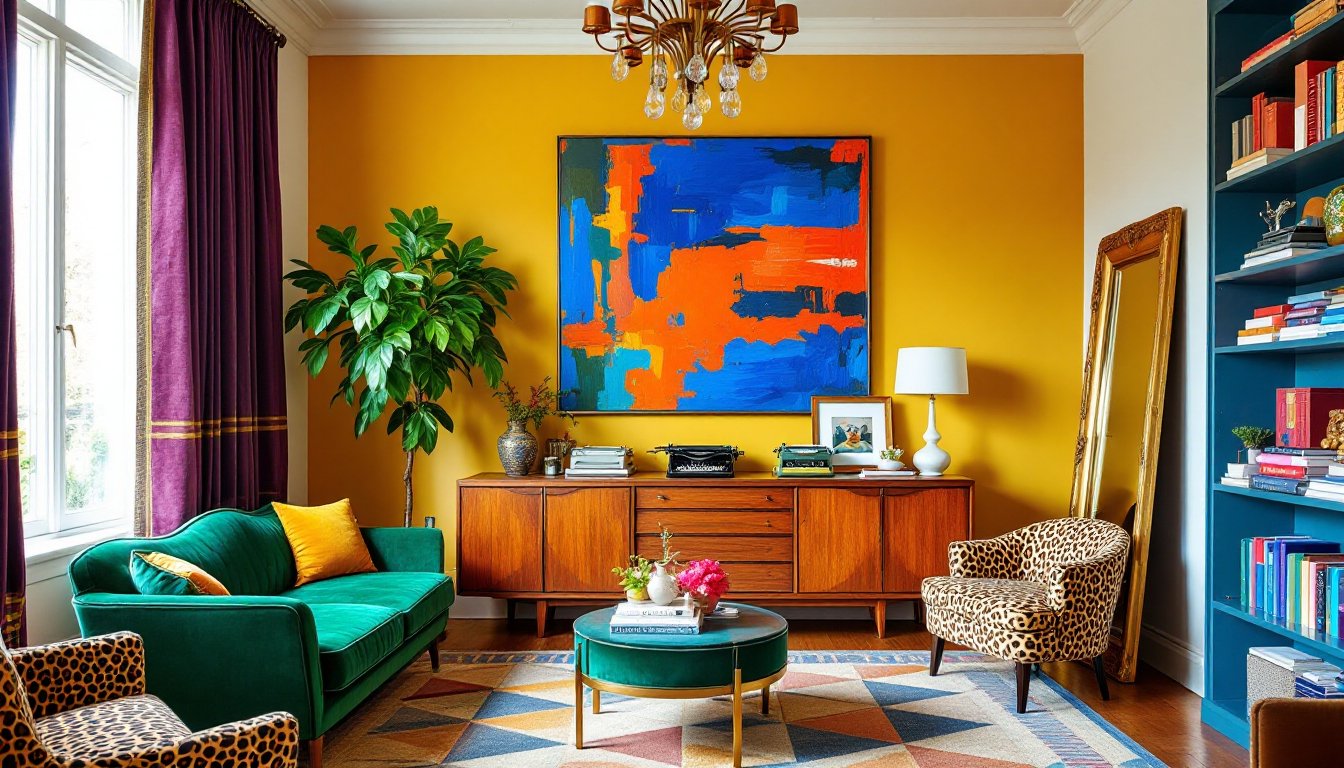

Eccentric interior design throws the rulebook out the window, and replaces it with taxidermy, vintage carnival signs, and wallpaper that shouldn’t work but somehow does. It’s not about following trends or achieving that elusive “timeless elegance.” It’s about building a space that tells a story, provokes a reaction, and feels unmistakably personal. For homeowners tired of beige-on-beige neutrals and catalog-perfect living rooms, eccentric design offers permission to take risks. But eccentricity isn’t the same as chaos. The best eccentric interiors balance boldness with intention, creating spaces that are livable, functional, and genuinely reflective of the people who inhabit them.
Key Takeaways
- Eccentric interior design prioritizes personal expression and intentional rule-breaking over conformity, using unexpected color combinations, vintage finds, and curated collections to create spaces that tell a unique story.
- Bold color pairings—like emerald green with burnt orange or mustard yellow with deep plum—and fearless pattern mixing are hallmarks of eccentric design, but require a unifying thread to appear intentional rather than chaotic.
- Statement pieces and curated collections anchor eccentric interiors, providing focal points and narrative depth; display them with care using odd-numbered groupings and varied heights to avoid a cluttered appearance.
- Start your eccentric interior design journey in a low-risk room like a bedroom or home office, building outward from a single object or color that genuinely excites you rather than rushing the process.
- Balance eccentricity with livability by maintaining clear pathways, layered lighting, strategic storage, and functional furniture arrangements that allow you to actually live in and enjoy your bold, personalized space.
What Is Eccentric Interior Design?
Eccentric interior design is a highly individualized approach that prioritizes personality, unexpected combinations, and deliberate rule-breaking over conventional aesthetics. It draws from multiple eras, styles, and influences without concern for “matching.” A Victorian settee might sit beside a midcentury credenza under a contemporary abstract painting, and the result feels cohesive because it reflects genuine taste, not a designer’s mood board.
This style thrives on contrast and surprise. Where traditional design seeks harmony through repetition and balance, eccentric design finds it through tension and dialogue between disparate elements. The key differentiator: intentionality. Random clutter isn’t eccentric, it’s just messy. Eccentric spaces are curated, even when they look chaotic.
Eccentricity also rejects the notion that homes should appeal to future buyers or dinner guests. These interiors are unapologetically personal. Collections of vintage typewriters, walls covered in framed butterfly specimens, or a chandelier made from reclaimed bicycle parts all qualify, provided they mean something to the homeowner and are thoughtfully integrated into the space.
Core Elements of Eccentric Interiors
Unexpected Color Combinations and Patterns
Eccentric spaces embrace color relationships that conventional palettes avoid. Think emerald green paired with burnt orange and cobalt blue, or mustard yellow against deep plum. These combinations create visual energy and prevent the eye from settling into predictable patterns.
Pattern mixing is equally bold. A leopard-print chair can coexist with striped curtains and a geometric rug, as long as there’s a unifying thread. That thread might be a shared color, similar scale in the pattern repeat, or consistent level of saturation. Without that connective tissue, the space reads as confused rather than confident.
Paint offers the most affordable entry point. A single accent wall in an unexpected hue, Farrow & Ball’s Railings (a near-black blue-green) or Benjamin Moore’s Hale Navy in a kitchen, can shift the entire mood. For renters or the commitment-phobic, removable peel-and-stick wallpaper in bold prints provides the same impact without the permanence. Brands like Tempaper and Chasing Paper offer options that won’t damage drywall upon removal.
Statement Pieces and Curated Collections
Every eccentric room needs at least one object that stops people in their tracks. This might be an oversized antique mirror with an ornate gilt frame, a refurbished claw-foot tub painted in high-gloss red, or a floor-to-ceiling bookshelf filled with color-coordinated spines.
Statement pieces anchor the space and give the eye a focal point. But they work best when surrounded by more restrained elements. A sculptural light fixture commands attention: filling the same room with six competing focal points dilutes the impact.
Collections add depth and narrative. Vintage cameras, global textiles, botanical prints, old apothecary jars, any grouping of related objects tells visitors what the homeowner values. Display matters: shadow boxes, open shelving, or gallery walls with mismatched frames keep collections from looking like garage-sale overflow. Arrange items in odd-numbered groups (3, 5, 7) and vary heights for visual interest.
How to Start Designing an Eccentric Space
Begin with one room rather than tackling the whole house. Bedrooms and home offices are lower-risk testing grounds since fewer people see them. Living rooms and entryways make bolder statements but require more confidence.
Identify a starting point: a single object, color, or theme that sparks genuine excitement. Maybe it’s a vintage Persian rug with unusual colors, a piece of outsider art picked up at a flea market, or a deep fascination with Art Deco geometry. Build outward from that anchor.
Source materials and furnishings from diverse channels. Estate sales, architectural salvage yards, online marketplaces (Chairish, 1stDibs, Facebook Marketplace), and thrift stores yield one-of-a-kind finds that chain retailers can’t replicate. Mix these with new items to avoid the “everything’s old” museum effect.
Don’t rush. Eccentric spaces evolve over time as the homeowner discovers objects that resonate. Trying to achieve the look in a single weekend shopping spree usually results in forced choices that feel inauthentic. Leave walls blank and corners empty until the right piece appears.
Test colors and arrangements with temporary solutions first. Paint sample boards (2′ × 2′ sections of drywall or foam core) instead of committing to full walls. Rearrange furniture multiple times. Take photos from different angles, the camera often reveals imbalances the eye misses in person.
Balancing Eccentricity with Livability
Eccentric doesn’t mean uncomfortable. A velvet sofa in peacock blue is bold: a velvet sofa so overstuffed with decorative pillows that no one can actually sit is poor planning. Every piece should serve a function, even if that function is purely emotional or aesthetic.
Maintain clear pathways and functional zones. Building codes typically require a minimum 36-inch walkway width in primary circulation areas, a good baseline even when codes don’t apply. Furniture arrangements should allow easy movement without side-shuffling past obstacles.
Balance visual weight across the room. If one wall is dense with color, pattern, and objects, the opposite wall might need breathing room, solid paint, minimal art, or low-profile furniture. This prevents sensory overload and gives the eye places to rest.
Consider lighting carefully. Eccentric spaces often incorporate vintage fixtures, colored glass shades, or unusual sculptural lamps. These add character but can create dim or uneven light. Supplement decorative lighting with practical task lighting: swing-arm reading lamps, under-cabinet LED strips in kitchens, or recessed cans on dimmer switches. Aim for layered lighting with ambient, task, and accent sources.
Storage keeps eccentricity from tipping into clutter. Built-in shelving, vintage trunks doubling as coffee tables, and closed cabinetry hide everyday necessities. Display the curated collections: conceal the mail, remote controls, and charging cables.
Be honest about maintenance. High-contrast grout, white upholstery, and delicate antiques require upkeep. Households with kids, pets, or messy hobbies might choose wipeable performance fabrics (like Crypton or Sunbrella), sealed surfaces, and durable finishes. Eccentricity can adapt to real life, it just requires intentional material choices.
Conclusion
Eccentric interior design isn’t a formula, it’s an attitude. It demands confidence, patience, and a willingness to trust personal taste over popular opinion. Start small, build around objects that genuinely resonate, and remember that the best spaces evolve rather than arrive fully formed. The result is a home that feels like no one else’s, because it isn’t.