
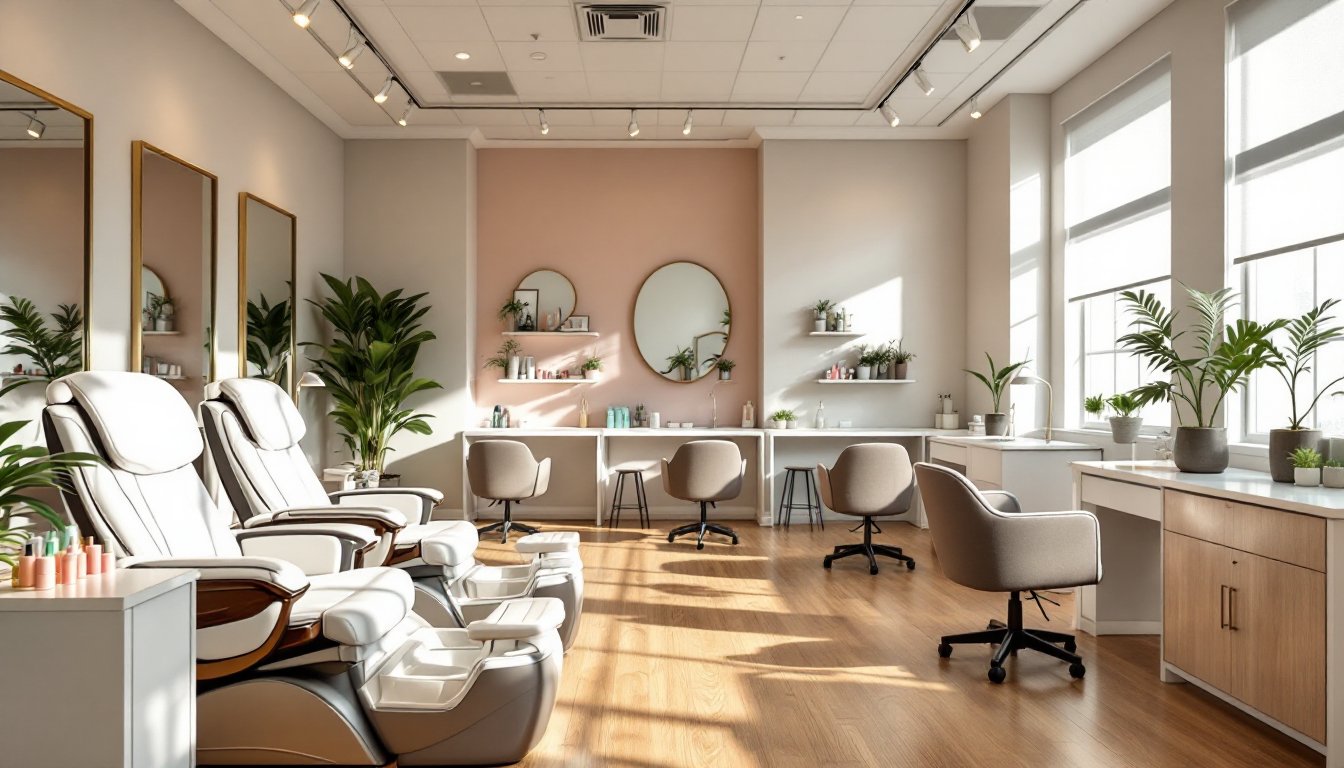

Opening a nail salon or refreshing an existing space involves more than selecting pretty colors and comfortable chairs. The interior design directly impacts client retention, service pricing potential, and overall profitability. A well-planned layout minimizes bottlenecks during peak hours, while thoughtful material choices ensure durability against acetone spills and constant foot traffic. From ventilation requirements that meet local health codes to lighting that allows technicians to see cuticles clearly, every design decision serves a functional purpose. This guide breaks down seven critical strategies for creating a salon environment that feels luxurious yet stands up to the daily demands of nail services.
Key Takeaways
- Nail salon interior design directly impacts client retention and pricing potential by forming first impressions within three seconds and justifying premium pricing through intentional, well-maintained spaces.
- Allocate 50-60 square feet per manicure station and 60-75 square feet per pedicure chair to prevent overcrowding and ensure efficient traffic flow that reduces service bottlenecks.
- Prioritize chemical-resistant flooring like porcelain tile or luxury vinyl plank (LVP) and ensure mechanical ventilation systems meet local health codes (typically 4-6 ACH) to withstand acetone exposure and comply with regulations.
- Use soft neutrals, satin paint finishes, and layered LED lighting with warm white tones (2700-3000K) to create calming ambiance while providing adequate task lighting for technician precision.
- Invest in commercial-grade pedicure chairs ($2,000-$5,000 each) with pipeless systems and ergonomic technician stools to reduce fatigue, turnover, and long-term maintenance costs.
- Incorporate brand consistency through custom signage, color-coordinated touchpoints, and low-maintenance décor like metal wall art or sealed canvas to build recognition and withstand daily chemical exposure.
Why Interior Design Matters for Your Nail Salon’s Success
First impressions form within three seconds of a client walking through the door. A cramped, outdated space signals low-quality service, while a cohesive, clean design justifies premium pricing. Interior design directly influences perceived value, clients willingly pay more for services delivered in environments that feel intentional and well-maintained.
Beyond aesthetics, smart design improves operational efficiency. Properly spaced pedicure stations prevent technicians from bumping elbows. Clear pathways reduce the risk of spills when carrying water basins. Durable, chemical-resistant materials like porcelain tile or luxury vinyl plank (LVP) flooring withstand acetone exposure better than hardwood or laminate, reducing long-term maintenance costs.
Local health departments often require specific ventilation rates for nail salons due to fume exposure from acrylics and gels. Many jurisdictions mandate mechanical exhaust systems with air changes per hour (ACH) ratings between 4-6, depending on square footage and service types. Design decisions must accommodate these systems early, retrofitting ductwork after construction costs significantly more. Consult local building codes before finalizing floor plans to avoid costly redesigns.
Essential Layout and Space Planning Considerations
Efficient traffic flow separates successful salons from chaotic ones. The reception area should sit near the entrance with clear sightlines to the door, allowing staff to greet clients immediately. Position retail displays within this zone, clients waiting for appointments browse impulse-buy items like cuticle oils and hand creams.
Allocate 50-60 square feet per manicure station and 60-75 square feet per pedicure chair to prevent overcrowding. This includes technician workspace and client clearance. Pedicure areas require additional room for plumbing access and drainage. Many salon owners underestimate the footprint needed for comfortable pedicure chairs with built-in basins, measure equipment dimensions before finalizing station counts.
Separate the nail service area from any hair or waxing services if operating a multi-service salon. Nail dust and acetone fumes shouldn’t drift into other treatment zones. Install separate HVAC returns or partition walls to maintain air quality boundaries.
Back-of-house needs include a staff break room, inventory storage, and a mixing/prep station for acrylics. These areas often get shortchanged during planning but affect employee satisfaction and service speed. A well-organized back area keeps clutter off the salon floor, maintaining the polished aesthetic clients expect.
Wheelchair accessibility isn’t optional, the ADA (Americans with Disabilities Act) requires accessible routes, doorways at least 32 inches wide when open, and accessible service areas. Verify clearance requirements during the design phase rather than discovering violations during inspection.
Color Schemes and Mood Psychology for Nail Salons
Color choices influence client emotions and dwell time. Soft neutrals, greige, taupe, warm white, create calming backdrops that won’t compete with colorful nail polish displays. These tones photograph well for social media, an important consideration since clients frequently share salon visits online.
Accent walls in blush pink, sage green, or muted lavender add personality without overwhelming the space. Avoid bright reds or oranges in large doses: these colors increase perceived room temperature and can feel jarring under salon lighting. Navy or charcoal work well in upscale salons targeting professional clientele, paired with gold or brass fixtures for contrast.
Finish selection matters as much as color. Satin or eggshell paint finishes resist staining better than flat paint and tolerate frequent cleaning. High-gloss finishes show every imperfection on walls that weren’t perfectly prepped, so reserve gloss for trim and accent pieces rather than full walls.
Consider how colors interact with artificial lighting. Cool white LED bulbs (5000K) make warm tones appear muddy, while warm white LEDs (2700-3000K) can make cool grays look dingy. Test paint samples under the planned lighting conditions, colors shift dramatically between daylight and evening artificial light.
Furniture and Station Selection for Comfort and Functionality
Pedicure chairs represent the single largest furniture investment. Built-in pipeless jet systems reduce bacterial growth compared to older circulating-jet models and simplify cleaning protocols. Expect to spend $2,000-$5,000 per chair for commercial-grade units: budget options break down quickly under daily use.
Manicure tables need chemical-resistant surfaces. Laminate or sealed wood tops work if properly maintained, but acrylic or gel spills etch unprotected finishes. Tables with built-in storage drawers keep supplies organized but complicate cleaning underneath, some health inspectors flag enclosed storage as dust traps. Open shelving or mobile carts offer easier sanitation.
Technician stools require pneumatic height adjustment and back support. Technicians spend hours in these seats: cheap stools lead to fatigue and turnover. Look for stools rated for 8+ hour daily use with easy-clean vinyl upholstery.
Client seating at manicure stations should have armrests at a height that allows relaxed arm positioning. Armless chairs save space but force clients to hold their arms up awkwardly, creating tension that makes precision work harder.
Reception furniture establishes the salon’s brand immediately. A solid wood or quartz-topped desk suggests higher-end services than a particle board piece from a big-box store. This isn’t about vanity, clients assess quality through these details and adjust their tipping accordingly.
Lighting Design That Enhances Both Ambiance and Precision
Nail technicians need excellent task lighting to spot lifting gel edges, uneven polish application, and cuticle details. LED task lamps at each station with adjustable arms and color temperatures around 5000K (daylight) provide clarity without the heat buildup of halogen bulbs. Magnifying lamps help with intricate nail art but aren’t necessary for standard services.
Ambient lighting should be layered, not reliant on a single overhead fixture. Recessed LED downlights on dimmer switches allow mood adjustment throughout the day, brighter during morning appointments, softer for evening relaxation services. Avoid placing recessed lights directly over pedicure chairs where they’ll shine in clients’ eyes: angle them toward walls or work surfaces instead.
Track lighting offers flexibility for highlighting retail displays or accent walls. Adjustable heads let owners redirect focus as the space evolves. Use warm white LEDs (2700-3000K) for retail zones to make products look inviting rather than clinical.
Natural light improves mood but requires control. South and west-facing windows bring intense afternoon heat that drives up cooling costs and fades furniture fabrics. Install solar shades or UV-filtering window film to diffuse light without blocking it entirely. North-facing windows provide consistent, gentle daylight ideal for salons.
Emergency egress lighting and exit signs are code requirements, factor these into the lighting plan rather than treating them as afterthoughts. Battery-backup LED exit signs cost more upfront but eliminate ongoing bulb replacement.
Finishing Touches: Décor, Branding, and Sensory Elements
Wall décor should enhance the brand without creating cleaning headaches. Framed mirrors make spaces feel larger and help clients check results from multiple angles. Avoid fabric wall hangings or anything porous, nail dust settles into textiles and becomes difficult to clean. Metal wall art, acrylic prints, or sealed canvas pieces tolerate regular wipe-downs better.
Live plants improve air quality and add warmth, but require maintenance. Snake plants, pothos, and ZZ plants tolerate the lower light levels common in commercial interiors and forgive irregular watering. Avoid placing plants near chemical storage or mixing areas where acetone fumes concentrate.
Scent marketing matters but requires subtlety. Overpowering fragrances combined with chemical odors trigger headaches. Essential oil diffusers with eucalyptus, lavender, or citrus provide gentle background scent without the cloying intensity of plugin air fresheners. Some clients have fragrance sensitivities, always have a neutral zone or outdoor seating option.
Sound systems should support conversation without forcing staff to shout. Background music between 60-70 decibels, roughly the volume of normal conversation, creates ambiance without interference. Streaming services designed for businesses ensure proper licensing: playing personal Spotify accounts in commercial settings violates copyright.
Branding touchpoints include custom signage, color-coordinated towels, and logo’d appointment cards. These details cost little but signal professionalism. Consistency across elements, if the logo features rose gold accents, those should appear in fixtures, frames, and hardware, creates a cohesive look that photographs well and builds brand recognition.
Conclusion
Successful nail salon design balances aesthetics with practical demands, chemical resistance, ventilation, cleanability, and ergonomics. Owners who invest in durable materials, proper lighting, and thoughtful layouts create spaces that attract premium clients while reducing long-term operating costs. Every fixture and finish should answer two questions: does it enhance the client experience, and will it hold up to daily salon operations? Prioritize these fundamentals over trends, and the design will remain functional and appealing for years.