
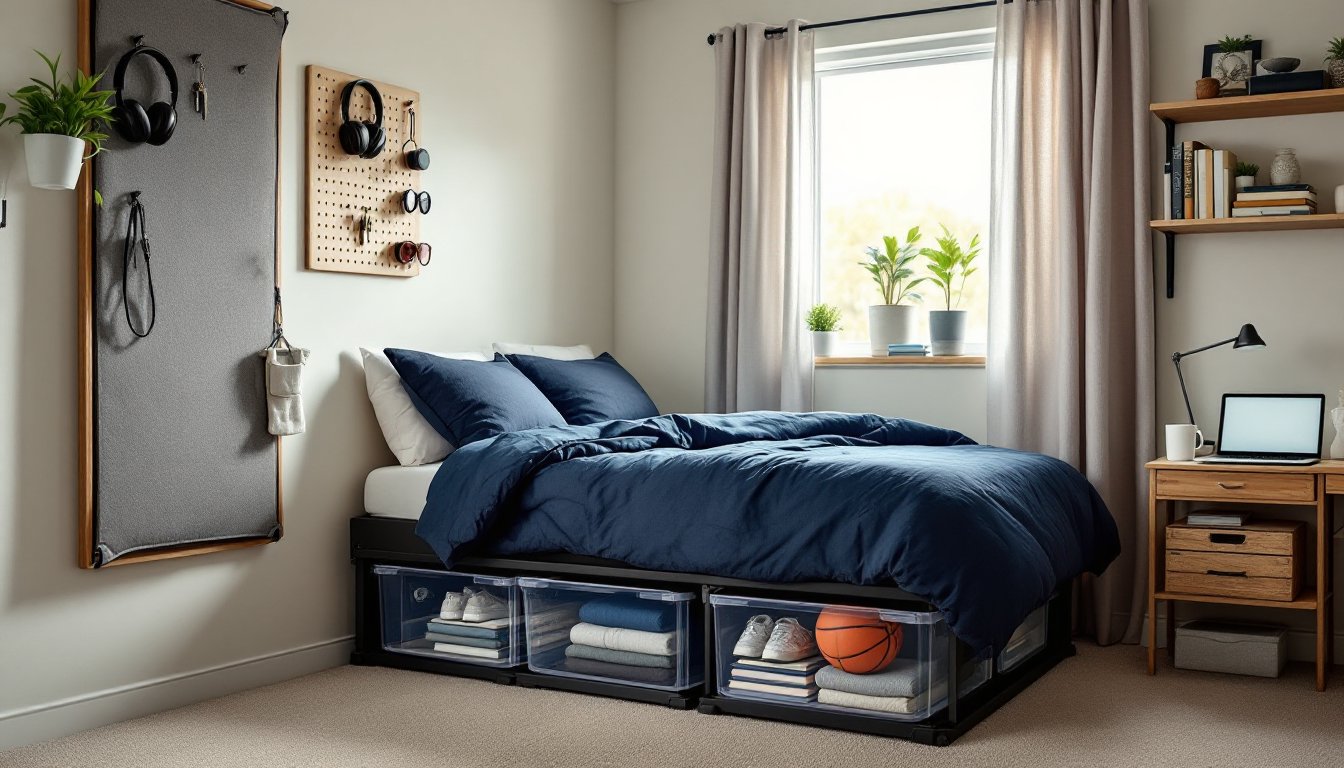

Living in a dorm room or studio apartment means dealing with roughly 100–150 square feet of usable space. That’s smaller than most suburban garages. For students juggling textbooks, clothing, sports gear, and the inevitable collection of snack supplies, every cubic inch counts. Poor storage doesn’t just create clutter, it costs money through lost items, damage to belongings, and unnecessary duplicate purchases. The good news? With the right approach to storage, students can reclaim space, protect their stuff, and actually save money in the process. This guide covers practical, tested solutions that work in tight quarters and on tight budgets.
Key Takeaways
- Student storage solutions can reclaim space and protect belongings while saving money by preventing lost items and unnecessary duplicate purchases.
- Under-bed storage systems using bed risers and rolling bins maximize the largest unused space in dorms, offering 12–15 cubic feet of storage at a low cost.
- Vertical wall-mounted solutions like over-the-door organizers, pegboard panels, and adhesive shelves add storage without consuming floor space in rental-restricted rooms.
- Semester break storage options include self-storage units ($40–$120/month), shared programs ($100–$200), or shipping boxes ($25–$50), each with distinct cost and convenience trade-offs.
- Budget-friendly hacks—milk crates, tension rods, repurposed thrift furniture, and cereal box dividers—deliver effective organization for under $25 per solution.
- Digital organization tools like cloud storage, password managers, and task apps prevent the stress and lost time caused by file loss, forgotten credentials, and scattered notes.
Why Students Need Dedicated Storage Solutions
Students face storage challenges that most homeowners don’t. They’re working with minimal square footage, no garage or basement, and often strict lease restrictions on modifications. Add the reality of frequent moves, sometimes twice a year, and the problem compounds.
Dorm rooms typically provide one small closet, a chest of drawers, and maybe a bookshelf. That’s insufficient for someone living there full-time. Seasonal clothing alone (winter coats, boots, bulky sweaters) can consume half the available closet space. Then there’s academic materials: textbooks average 3–5 pounds each, and a full course load can mean 15–20 books per semester.
Without proper storage, items end up piled on floors, shoved under beds haphazardly, or worse, left in vehicles or hallways where they’re vulnerable to theft or damage. Students who don’t address storage end up spending more: replacing lost chargers, re-buying toiletries they can’t locate, or paying for expedited shipping on items buried in boxes.
The right storage setup does three things: maximizes vertical and hidden space, keeps frequently used items accessible, and protects belongings during the chaos of semester transitions. It’s not about aesthetics, it’s about function and economics.
Best Storage Options for Dorm Rooms and Small Apartments
The best student storage leverages underutilized space and adapts to the constraints of rental living. Two approaches deliver the most return: going low (under furniture) and going high (vertical surfaces).
Under-Bed Storage Systems
The space beneath a bed is typically the largest unused volume in a dorm room. A standard twin XL bed offers roughly 12–15 cubic feet of storage if the frame is raised 12–14 inches off the floor.
Bed risers are the first step. Look for models rated to handle at least 1,000 pounds total capacity, cheaper plastic versions can crack under dynamic loads (someone sitting down hard). Stackable risers in 3-inch, 5-inch, or 8-inch heights let students adjust clearance based on what they’re storing. Cost runs $15–$25 for a set of four.
Once the bed is elevated, use rolling storage bins with rigid sides. Soft-sided fabric bins sag and become difficult to slide out when full. Clear plastic bins (roughly 28″ L × 16″ W × 6″ H) let students see contents without digging. Avoid stacking bins under the bed, retrieval becomes a frustration.
For heavier items like textbooks or tools, consider shallow rolling drawers with ball-bearing wheels. These handle 30–40 pounds without jamming and pull out smoothly even on carpet.
One caution: don’t store anything heat-sensitive or moisture-prone under a bed. Laptop chargers, batteries, and electronics fare poorly in low-airflow spaces, especially in older buildings without climate control.
Vertical Storage and Wall-Mounted Solutions
Walls represent untapped real estate. Most dorms prohibit traditional screws or nails, but damage-free mounting systems like 3M Command strips (rated for 3–16 pounds depending on size) or tension rods open up options.
Over-the-door organizers work on closet doors and entry doors. Canvas models with 12–20 pockets handle shoes, toiletries, accessories, or cleaning supplies. They add zero floor footprint and cost $12–$30. Check that the door clears the organizer when opening, tight hallways can make wide organizers impractical.
Wall-mounted shelves using adhesive strips provide 8–12 inches of depth for books, plants, or decorative storage boxes. Place them at least 60 inches off the floor to avoid head-bumping. Corner shelves exploit the dead space where two walls meet.
Pegboard panels (24″ × 24″ sections) attach with Command strips or 3M Dual Lock and create customizable storage for everything from keys and headphones to kitchen utensils. They’re especially useful in micro-kitchens where counter and cabinet space is minimal.
For students in apartments where modifications are allowed, floating shelves installed with proper wall anchors (toggle bolts for drywall, masonry anchors for concrete) support 20–50 pounds per linear foot. Always locate studs when possible, drywall alone won’t reliably hold loaded shelves.
One tool tip: a stud finder (around $15–$25 for a basic magnetic or edge-finding model) prevents guesswork and wall damage. Even in rentals, knowing what’s behind the drywall helps choose appropriate hardware.
Summer and Semester Break Storage Strategies
Students living far from campus face a choice at semester’s end: haul everything home or store it locally. Both options have cost and logistics to consider.
Self-storage units near campuses typically run $40–$120 per month for a 5′ × 5′ or 5′ × 10′ space, depending on climate control and location. A 5′ × 5′ unit holds roughly the contents of a dorm room (mattress topper, mini-fridge, desk items, clothes). Splitting a 5′ × 10′ unit between two or three students cuts individual cost to $15–$40 per month.
Book early, storage facilities near colleges fill up in April and May, and prices can jump 20–30% during peak move-out weeks. Month-to-month leases offer flexibility but cost more than 3-month prepaid blocks.
Before loading a unit, prep items properly. Vacuum-seal bags compress bulky clothing and bedding to one-third their normal volume. Wipe down the mini-fridge, leave the door propped open to prevent mold, and remove batteries from electronics. Moisture-absorbing products (silica gel packs or DampRid containers) prevent mildew in non-climate-controlled units.
Shared summer storage programs run by some student organizations or third-party companies offer pickup, storage, and return delivery for $100–$200 per student. They handle the logistics but require trusting someone else with belongings. Read reviews and verify insurance coverage before handing over your stuff.
For students driving or flying home, shipping consolidated boxes via USPS or UPS Ground can beat checked baggage fees. A 20″ × 20″ × 15″ box shipped cross-country runs $25–$50 depending on weight and speed. Compare that to $35–$75 per checked bag on most airlines.
One pro move: take photos of serial numbers and document valuable items before storing or shipping. If something goes missing, insurance claims require proof of ownership and value.
Digital Organization Tools for Student Life
Physical storage solves half the problem. Digital clutter, lost files, forgotten passwords, scattered notes, creates just as much stress and wastes time that could go toward studying or sleeping.
Cloud storage services like Google Drive, Dropbox, or OneDrive (most schools provide free institutional accounts) eliminate the risk of losing work to a crashed laptop or stolen tablet. Set up automatic sync for key folders: coursework, receipts, important documents. Store scans of IDs, insurance cards, and lease agreements in a folder labeled “Essential Docs.”
Password managers (Bitwarden, 1Password, or Dashlane) store login credentials behind one master password. Students juggle 30–50 online accounts on average, reusing passwords or writing them on Post-its invites security problems. Most managers offer free tiers sufficient for student use.
Note-taking and task apps like Notion, OneNote, or Evernote centralize class notes, to-do lists, and project planning. Tag notes by course, semester, or topic for fast retrieval during exam prep. Digital notes also mean no lost notebooks or unreadable handwriting.
For those managing part-time jobs, internships, or gig work alongside classes, calendar syncing across devices prevents missed shifts or double-booked commitments. Google Calendar or Outlook integrate with most school systems and send reminders.
One backup rule: follow the 3-2-1 strategy, three copies of important files, on two different types of media (cloud and external drive), with one copy off-site. An external SSD (256 GB runs about $30–$50) provides fast local backup and doesn’t rely on Wi-Fi.
Budget-Friendly Storage Hacks Every Student Should Know
Students don’t need expensive systems, they need clever use of cheap materials and a little elbow grease.
Milk crates and wooden crates stack into modular shelving. A dozen plastic milk crates (often $3–$5 each at home goods stores) zip-tied together create a bookshelf, shoe rack, or media console. Wooden crates from craft stores work similarly and look less industrial.
Tension rods aren’t just for curtains. Install one vertically in a closet corner to hang bags, scarves, or belts. Use two horizontally under a sink to create a pull-out organizer for cleaning supplies. A standard spring-loaded rod costs $8–$15 and requires no tools.
Shoe organizers have uses beyond footwear. Hang one inside a pantry or linen closet for snacks, toiletries, or craft supplies. The clear pocket versions (around $10) make it easy to spot what’s running low.
Cardboard drawer dividers made from cereal boxes or shipping boxes organize dresser drawers at zero cost. Cut boxes to fit, arrange in a grid, and suddenly socks and chargers have dedicated homes.
Repurposed furniture from thrift stores, Craigslist, or campus surplus sales often costs a fraction of new items. A $15 filing cabinet becomes a nightstand with a coat of spray paint ($5 per can). Sand lightly, apply a coat of primer, then finish with paint suitable for metal. Total cost: under $25 for a functional piece that would run $75–$150 new.
Always wear a dust mask (N95 or equivalent) when sanding or spray painting, and work outdoors or in a well-ventilated space. Check local disposal rules for empty paint cans, most areas have hazardous waste drop-off programs.
One final hack: community tool libraries and maker spaces near many campuses lend tools for free or a small membership fee. Before buying a drill or saw for a one-time project, check if there’s a shared resource available.