
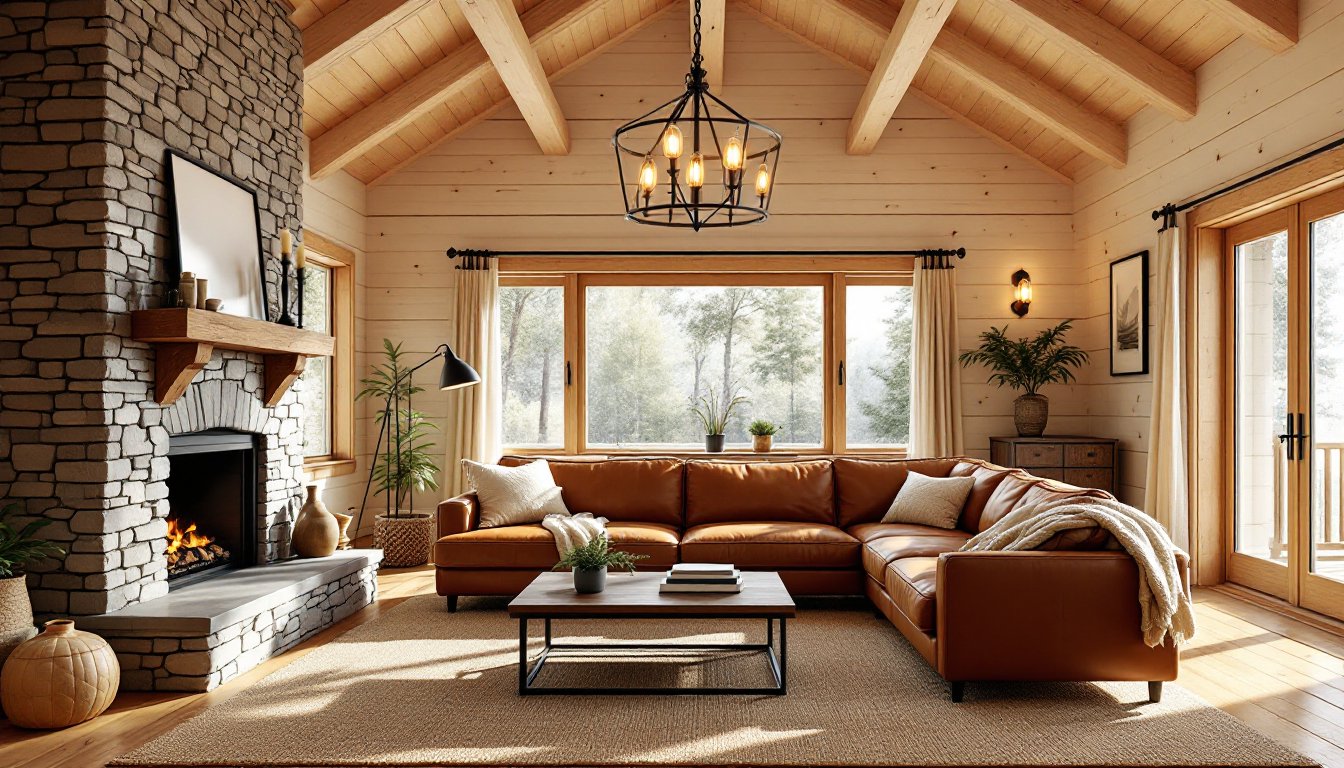

Log cabin interiors offer a unique design challenge: how to honor exposed wood’s natural beauty while creating a space that feels finished, comfortable, and functional. Too little intervention leaves rooms feeling dark and unfinished. Too much coverage defeats the purpose of living in a log home. The goal is balancing rustic architecture with livable, well-designed spaces that work year-round. Whether it’s a new build or a decades-old structure, thoughtful choices in color, furnishings, lighting, and textiles can transform raw wood walls into a warm, inviting home without fighting the material or mimicking a hunting lodge catalog.
Key Takeaways
- Log cabin interior design requires balancing exposed wood’s natural beauty with livable, well-designed spaces that feel finished and comfortable year-round.
- Ceiling treatments, wall balance, and strategic use of lighter finishes or whitewashing help prevent log cabin interiors from feeling dark while preserving rustic character.
- Choose paint colors and furnishings that complement rather than compete with wood tones—warm palettes for cozy spaces, cool tones for bright rooms, and neutral greige for flexibility.
- Layered lighting combining ambient, task, and accent fixtures is essential since wood absorbs light; use 2700K–3000K warm bulbs for pine and cedar logs to enhance their natural golden tones.
- Mix furniture styles and wood tones to avoid a dated look—pair upholstered pieces in durable fabrics like leather and canvas with wood furnishings that contrast with wall colors.
- Integrate modern amenities like stainless steel kitchens, heated bathrooms, and discreet technology through smart planning and concealed cabling to preserve the cabin’s rustic aesthetic without sacrificing convenience.
Essential Elements of Log Cabin Interior Design
Log cabin interiors revolve around one dominant material: wood. Recognizing this as both the foundation and constraint shapes every design decision.
Ceiling treatment sets the tone. Exposed log beams or tongue-and-groove planking add visual interest overhead but can darken rooms if stained too heavy. Many homeowners opt for lighter finishes or whitewashing on ceiling wood to bounce light downward. In two-story cabins, open cathedral ceilings amplify the rustic feel but present heating challenges, plan for ceiling fans with reversible motors to push warm air down in winter.
Wall balance matters. Not every surface needs to be log. Mixing full-log walls with drywall or shiplap sections (painted or finished) gives the eye relief and creates cleaner backdrops for artwork, shelving, or mounted TVs. This approach works especially well in kitchens and bathrooms where moisture resistance is critical.
Flooring choices should complement, not compete with, wall logs. Wide-plank hardwood, natural stone tile, or polished concrete are common. Avoid busy patterns that clash with the wood grain already dominating the space. For colder climates, consider radiant floor heating during construction: it’s far easier to install before the cabin’s finished than retrofitting later.
Architectural details like stone fireplaces, iron railings, and timber mantels reinforce the cabin aesthetic without adding clutter. These elements should feel structural, not decorative add-ons.
Choosing the Right Color Palette for Your Log Cabin
Log species and finish dictate the starting palette. Pine and cedar logs skew yellow to orange: oak and walnut run brown to gray. Fighting that baseline tone rarely works. Instead, pull accent colors that either harmonize or provide intentional contrast.
Warm palettes (rust, terracotta, deep gold, forest green) extend the wood’s natural warmth and create enveloping, cozy spaces. This approach suits cabins used primarily in fall and winter or locations with dense tree cover where interiors already lean dim.
Cool palettes (slate gray, soft blue, sage, cream) offset amber-toned logs and brighten spaces. Cooler tones work well in sun-exposed cabins or where large windows let in significant natural light. They prevent interiors from feeling overly heavy or monochromatic.
Neutrals (off-white, greige, charcoal) offer flexibility. Painted trim, cabinetry, or accent walls in muted tones let homeowners swap textiles and decor seasonally without repainting. Benjamin Moore’s Swiss Coffee or Sherwin-Williams’ Alabaster are popular cabin choices, warm enough to avoid stark contrast with wood but light enough to open up dim corners.
Avoid pure white unless logs are very pale or whitewashed: the contrast can feel jarring. Similarly, avoid colors with strong yellow or orange undertones if logs already lean warm, it amplifies the effect into orange overload.
Furniture Selection That Complements Wood Interiors
In a log cabin, furniture doesn’t need to be rustic just because the walls are. The key is choosing pieces that ground the space without competing for attention.
Upholstered pieces in solid, durable fabrics (leather, canvas, heavyweight linen) anchor seating areas. Leather softens with age and handles the wear of cabin life, dogs, wet boots, firewood dust. Avoid busy patterns on large furniture: they clash with the visual texture already present in log walls and wood grain.
Wood furniture should differ in tone or finish from the walls. If walls are honey-toned pine, consider darker walnut or espresso-stained tables. If logs are dark, lighter oak or painted wood furniture prevents the room from feeling like a cave. Mixing wood tones is fine, matchy-matchy furniture suites feel dated and flat.
Scale matters in cabins with high ceilings or open plans. Oversized sectionals, hefty coffee tables, and substantial dining sets fit the architecture better than delicate, spindly pieces. That said, avoid overstuffing small spaces: a cramped cabin feels claustrophobic regardless of style.
Metal and stone accents, iron bed frames, steel side tables, slate-top consoles, add contrast and keep interiors from feeling one-note. Avoid overly ornate or fussy designs: simpler silhouettes let materials speak for themselves.
Built-ins are worth considering. Custom benches with storage, window seats, or floor-to-ceiling bookshelves make use of awkward angles common in log construction and reduce furniture clutter.
Lighting Strategies to Enhance Natural Wood Tones
Wood absorbs light. Without a solid lighting plan, even well-designed log cabins feel dim and cave-like, especially in winter or heavily wooded settings.
Layered lighting is non-negotiable. Relying solely on overhead fixtures leaves corners dark and flattens the room. Combine ambient (ceiling fixtures, recessed cans), task (reading lamps, under-cabinet strips), and accent (picture lights, uplights on beams) lighting.
Bulb color temperature dramatically affects wood tones. Warm white bulbs (2700K–3000K) enhance the amber and gold in pine and cedar, creating a cozy glow. Neutral white (3500K–4000K) works better with darker logs or cool paint palettes, preventing the orange cast that warmer bulbs amplify. Avoid daylight bulbs (5000K+) unless the goal is a workshop feel, they make wood look washed out.
Fixture styles should align with the cabin’s overall aesthetic. Wrought iron chandeliers, antler reproductions (real antlers are heavy, expensive, and ethically questionable for some buyers), and blackened steel pendants reinforce rustic themes. Industrial-style Edison bulb fixtures and matte black sconces bridge rustic and modern.
Window treatments impact lighting as much as fixtures. Heavy drapes block precious daylight: consider linen or burlap panels that diffuse light without eliminating it. In privacy-optional settings, skip treatments entirely or use top-down/bottom-up shades.
For cathedral ceilings, install dimmers on all overhead lighting. Full brightness washes out the wood’s depth: dimmed lighting at night highlights grain and texture.
Textiles and Textures That Add Warmth and Comfort
Textiles soften hard surfaces and prevent log interiors from feeling cold or echo-prone. Strategic layering makes the difference between a cozy cabin and a timber barn.
Area rugs define spaces and add acoustic dampening. Wool, jute, and cowhide are durable choices that handle foot traffic and dirt. Size appropriately, rugs that are too small look like bath mats. In living areas, the front legs of furniture should rest on the rug: in dining areas, chairs should remain on the rug even when pulled out.
Throw blankets and pillows inject color, pattern, and seasonal flexibility. Chunky knit throws, faux fur, and plaid wool are cabin classics. Mix textures, pair smooth leather with nubby linen, or slick cotton with cable-knit wool. Change them out seasonally if desired: lighter linens in summer, heavier wools in winter.
Window treatments in natural fibers (linen, cotton, burlap) maintain the organic feel. Blackout linings are worth adding in bedrooms, especially in northern latitudes with long summer daylight.
Upholstery fabric should be practical. Cabins see more dirt, moisture, and wear than suburban homes. Performance fabrics (Crypton, Sunbrella) offer stain resistance without sacrificing style. Removable, washable slipcovers are another smart option.
Avoid synthetic, shiny fabrics, polyester satin or acrylic velvet, that clash with the cabin’s natural materials. Stick with matte, textured weaves that feel as organic as the wood surrounding them.
Balancing Rustic Charm With Modern Amenities
A log cabin doesn’t have to mean roughing it. The challenge is integrating contemporary convenience without killing the aesthetic.
Kitchens benefit most from modern upgrades. Stainless steel appliances, quartz or butcher-block countertops, and ample task lighting make cooking functional. Consider a large farmhouse sink and open shelving instead of upper cabinets to prevent the space from feeling closed-in. If budget allows, panel appliances with wood fronts to blend with cabinetry.
Bathrooms can embrace modern fixtures, rainfall showerheads, heated towel bars, soaking tubs, while keeping materials grounded. Pair subway tile or natural stone with wood vanities or mirrors framed in reclaimed lumber. Matte black or oil-rubbed bronze fixtures bridge rustic and contemporary better than shiny chrome.
Technology integration requires planning. Flat-screen TVs, sound systems, and Wi-Fi are expected, but visible cable runs and plastic routers break immersion. Run cabling through walls during construction or use cable concealers stained to match wood. Mount TVs above fireplaces sparingly, heat damages screens, and neck strain makes viewing uncomfortable. Built-in cabinetry with pocket doors hides electronics when not in use.
HVAC and insulation are critical. Log homes can be drafty and energy-inefficient without proper chinking (sealant between logs) and modern insulation standards. Ductless mini-splits offer efficient heating and cooling without bulky ductwork. Wood stoves and fireplaces add ambiance but aren’t sufficient as primary heat sources in most climates.
Smart home features, programmable thermostats, app-controlled lighting, security cameras, work fine in cabins. Just keep visible hardware minimal and finishes consistent.
Conclusion
Log cabin interior design succeeds when it respects the wood without being ruled by it. Thoughtful color choices, scaled furniture, layered lighting, and quality textiles turn structural logs into a livable, comfortable home. The best cabins blend rustic bones with modern function, spaces that feel connected to the outdoors but don’t sacrifice convenience or style. Start with the essentials, add personality through details, and don’t overthink it. The logs have already done the heavy lifting.