
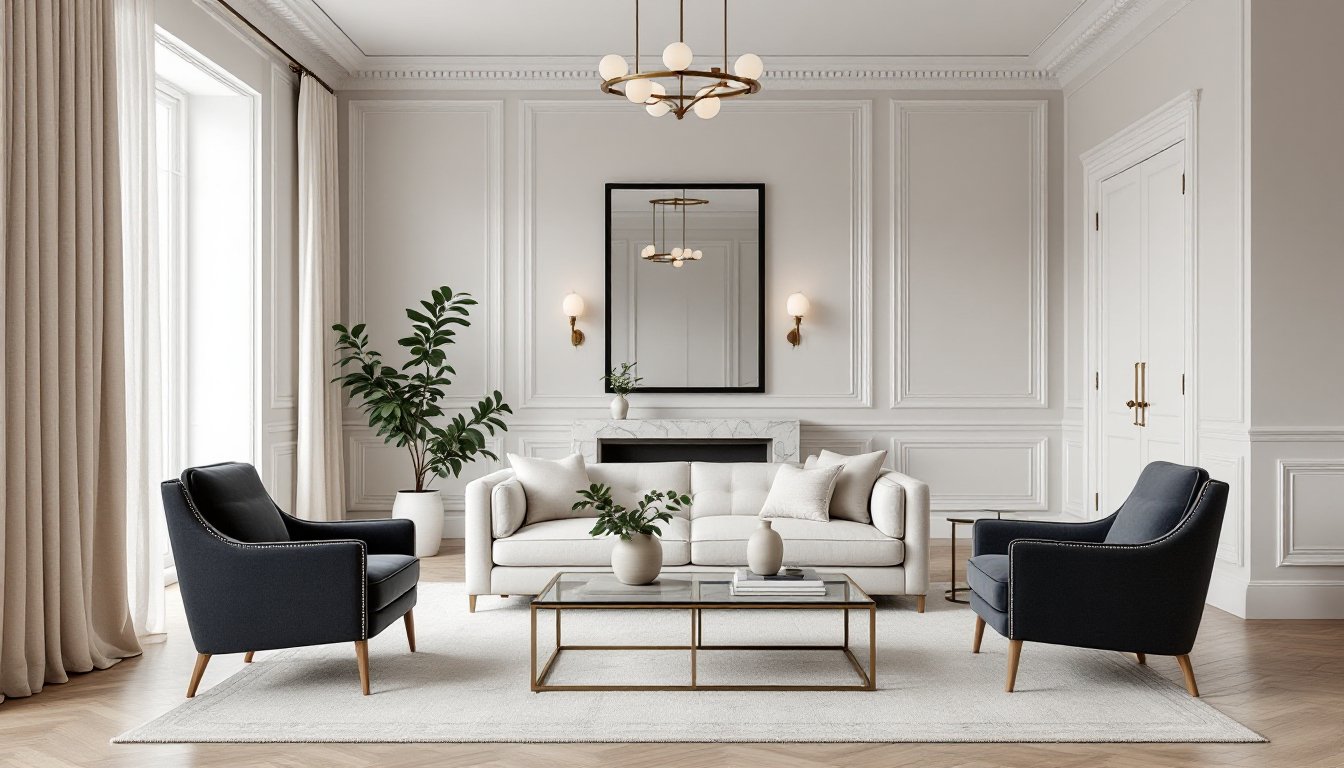

Modern neoclassical interior design takes the formal grace of 18th-century European architecture and strips away the excess. What remains is a clean, proportionate aesthetic that pairs fluted columns with streamlined furniture, ornate crown molding with minimalist lighting, and marble with matte-black fixtures. This hybrid style appeals to homeowners who want rooms that feel dignified without being stuffy, and curated without looking cold. It’s not about recreating Versailles in a suburban living room, it’s about borrowing the symmetry, materials, and architectural vocabulary of classical design, then editing ruthlessly. Done well, modern neoclassical interiors feel both grounded in history and utterly livable.
Key Takeaways
- Modern neoclassical interior design merges 18th-century European architectural elegance with contemporary minimalism, creating spaces that feel dignified and livable without excess ornamentation.
- Architectural millwork—including crown molding, wainscoting, and fluted columns—forms the foundation of modern neoclassical style and requires precision in alignment and installation.
- Neutral color palettes with contrast from texture and sheen, combined with substantial materials like wide-plank hardwood and natural stone, anchor the refined aesthetic of modern neoclassical interiors.
- Furniture in modern neoclassical design should feature clean lines and classical silhouettes with visible craftsmanship, prioritizing structured seating and symmetrical arrangement over casual, overstuffed pieces.
- Lighting design should layer ambient, task, and accent sources, with statement chandeliers scaled to room proportions and fixtures finished in brushed brass, polished nickel, or matte black to maintain design cohesion.
- Modern neoclassical spaces thrive in homes with 8+ foot ceilings and require careful measurement, intentional accessory selection, and strict attention to detail for a polished, cohesive result.
What Is Modern Neoclassical Interior Design?
Modern neoclassical design is a reinterpretation of classical Greek and Roman aesthetics, filtered through a contemporary lens. Traditional neoclassicism, popularized in the late 1700s and early 1800s, emphasized symmetry, order, and ornamentation drawn from antiquity. Think grand columns, coffered ceilings, and intricate plasterwork.
The modern version keeps the bones but sheds the heavy drapery and gilded excess. Rooms still rely on balanced proportions and architectural detail, but finishes lean neutral, furniture silhouettes simplify, and color palettes stay restrained. A modern neoclassical dining room might feature wainscoting (raised or recessed panels on the lower wall) painted in soft gray, paired with a sleek glass-top table and brass-legged chairs.
This style works best in homes with decent ceiling height, 8 feet minimum, though 9 to 10 feet allows moldings and columns to breathe. It also suits open floor plans where sightlines let symmetry play across multiple rooms. Renovating to add architectural detail can involve carpentry, drywall finishing, and paint, none of it structural, but all requiring careful measuring and prep work.
Modern neoclassical isn’t a shortcut. It demands precision in alignment, consistent finish quality, and an understanding of proportion. A poorly installed chair rail or mismatched trim profiles will stand out more than in busier styles.
Key Elements of Modern Neoclassical Style
Architectural Details and Moldings
Architectural millwork is the foundation of modern neoclassical design. Crown molding, baseboards, wainscoting, and ceiling medallions establish the visual framework before furniture or paint enters the picture.
Crown molding should be substantial but not baroque. A 4- to 6-inch profile in a simple cove or dentil pattern works for most residential spaces. Wider profiles (up to 8 inches) suit higher ceilings but require blocking or backing at the ceiling-wall joint to secure properly. Installation involves cutting accurate miters, a 10- or 12-inch miter saw is essential for clean corners. Coped joints often look tighter than mitered joints at inside corners, especially if walls aren’t perfectly square.
Wainscoting can be applied or recessed. Recessed panel wainscoting (also called picture-frame wainscoting) uses 1×4 or 1×6 boards to create a raised frame around flat panels. Applied wainscoting uses thinner trim over drywall. Either way, panels should align with door and window casings to maintain visual rhythm. A laser level ensures horizontal rails stay true across long walls.
Fluted columns or pilasters add vertical drama. Pre-made polyurethane or wood pilasters are available in standard widths (typically 3 to 6 inches) and can be glued and nailed directly to drywall, then caulked and painted. Full columns are usually decorative rather than load-bearing in residential settings, but verify with a structural engineer before removing any existing column, even if it looks ornamental.
Ceiling medallions frame chandeliers or pendant fixtures. Modern versions are simpler than traditional rosettes, think concentric rings rather than acanthus leaves. Lightweight polyurethane medallions install with construction adhesive and finish nails. Always turn off power at the breaker before working around ceiling junction boxes.
All trim should be primed on all sides before installation to prevent warping, especially in humid climates. Use a high-quality acrylic latex caulk to fill gaps, and sand lightly between primer and finish coats for a glass-smooth result.
Color Palettes and Material Choices
Modern neoclassical palettes stay neutral, with contrast coming from texture and sheen rather than hue. Walls often wear shades of off-white, greige, or soft gray, colors like Benjamin Moore’s Classic Gray or Sherwin-Williams’ Agreeable Gray are common starting points. Trim is typically pure white or slightly warmer white in a satin or semi-gloss finish to reflect light and highlight profiles.
Accent walls, if used, lean toward muted jewel tones, deep teal, charcoal, or warm taupe, rather than bold primaries. Paint finishes matter: eggshell or matte on walls, satin or semi-gloss on trim and doors. Higher-sheen paints are easier to clean and more durable in high-traffic areas.
Flooring should feel substantial. Wide-plank engineered hardwood (5 to 7 inches wide) in light oak, walnut, or whitewashed finishes anchors the aesthetic. Luxury vinyl plank (LVP) is a budget-friendly alternative that mimics wood grain without the expansion issues, just ensure it’s installed over a flat subfloor (within 3/16 inch over a 10-foot span, per most manufacturer specs).
Natural stone appears in high-impact zones: marble or quartz countertops, travertine or marble tile in entryways or bathrooms. Real marble requires sealing every 6 to 12 months to resist stains: quartz is non-porous and lower-maintenance. Tile should be set with thin-set mortar over cement board in wet areas, with grout joints no wider than 1/8 inch for a refined look.
Metallics provide subtle contrast. Brushed brass, unlacquered brass (which patinas over time), polished nickel, and matte black are all on-brand. Cabinet hardware, light fixtures, and plumbing fixtures should share a finish family within connected spaces.
Textiles favor natural fibers: linen, cotton, wool, and silk. Avoid synthetics or overly textured fabrics. Drapery should be simple, pinch-pleat or ripplefold headers in solid colors, hung from sleek rods. Consider blackout lining for bedrooms, or interlining for a more substantial drape.
How to Incorporate Modern Neoclassical Design in Your Home
Furniture Selection and Placement
Modern neoclassical furniture blends classical silhouettes with contemporary restraint. Look for pieces with clean lines, gentle curves, and visible craftsmanship, but avoid heavy carving or excessive ornamentation.
Seating should feel structured. Think tufted sofas with turned legs, wingback chairs with nailhead trim, or velvet armchairs with tapered wooden legs. Avoid low-slung sectionals or overstuffed recliners, they clash with the formality. Seat depth typically runs 20 to 24 inches: deeper seats can feel too casual.
Tables favor symmetry. A rectangular or oval dining table with a pedestal base or classical legs pairs well with upholstered dining chairs. Coffee tables in wood, marble, or glass-top with metal frames keep sightlines open. Console tables behind sofas or in entryways should have architectural legs, fluted, tapered, or turned.
Case goods (dressers, cabinets, sideboards) should reference traditional joinery, dovetail drawers, mortise-and-tenon frames, even if they’re modern reproductions. Hardware should be understated: simple pulls in brushed brass or polished nickel, not oversized knobs.
Arrangement is deliberate. Symmetry rules: matching nightstands flank a bed, pairs of chairs face a fireplace, identical lamps anchor a console. Measure carefully to center artwork and mirrors over furniture. Use painter’s tape on the floor to mock up layouts before moving heavy pieces.
Leave enough clearance for traffic: 30 to 36 inches between furniture and walls, 18 inches between a coffee table and sofa. Rugs should be large enough that front legs of seating pieces rest on them, ideally, an 8×10 or 9×12 in most living rooms.
Lighting and Accessories
Lighting in modern neoclassical spaces layers ambient, task, and accent sources, but each fixture should earn its place through form and function.
Chandeliers are the signature move, scaled to the room. In dining rooms, a chandelier should be roughly half to two-thirds the width of the table, hung 30 to 36 inches above the tabletop. In entryways with high ceilings, a statement piece can go larger, but keep the bottom at least 7 feet above the floor. Modern takes on traditional crystal chandeliers, globe pendants, Sputnik-style fixtures with brass arms, or geometric cage designs, work better than full-on rococo.
Sconces flank mirrors, artwork, or run along hallways. Install them 60 to 66 inches to center from the floor, or slightly higher in rooms with tall ceilings. Hard-wire them if possible (requires a junction box and may need a permit): plug-in versions work but look less integrated.
Table and floor lamps should have classic proportions: urn-shaped ceramic bases, column lamps in marble or wood, tripod floor lamps in brass. Shades should be linen or cotton in white or cream, not patterned.
Accessories are minimal and intentional. A few well-chosen objects, a marble sculpture, a framed architectural print, a pair of matching ceramic vases, carry more weight than a shelf full of clutter. Mirrors amplify light and symmetry: look for designs with simple frames in gilded wood or matte black metal.
Books can be styled on coffee tables or in built-ins, but keep spines aligned and stacks tidy. Greenery should be architectural: fiddle-leaf figs, olive trees in ceramic pots, or simple arrangements of eucalyptus in glass vases.
Avoid mixing too many metal finishes in one sightline, stick to two, maybe three. And always install fixtures to code: use proper junction boxes, follow load ratings, and if swapping a light fixture that weighs more than 50 pounds, add blocking or a fan-rated box to the ceiling joist.