
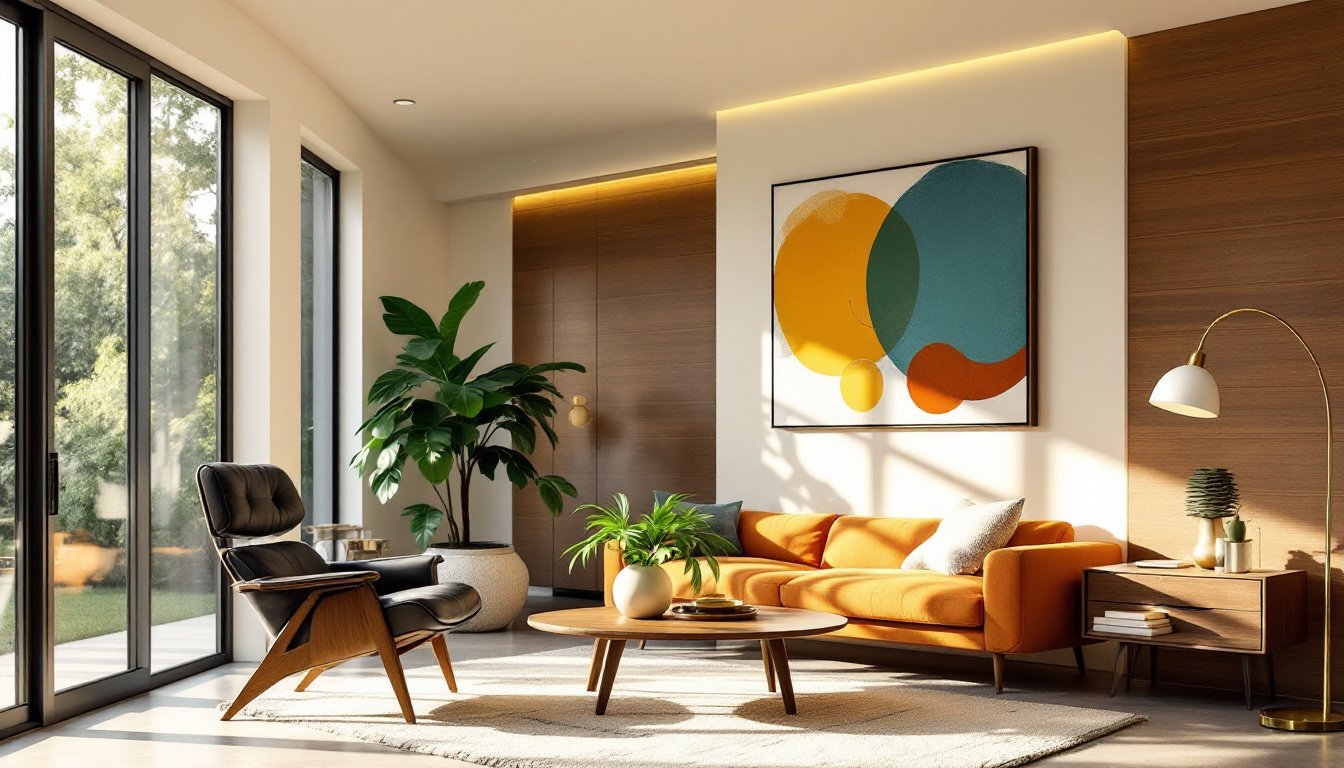

Mid-century modern (MCM) interior design refuses to fade. Born in the postwar boom of the 1940s–60s, this style balances clean lines, organic forms, and functional beauty, principles that still resonate decades later. Unlike trends that cycle in and out, MCM has become a design staple, showing up in everything from high-end renovations to budget flips. But nailing the look takes more than tossing a teak credenza in the corner. It requires understanding the core principles, choosing the right materials, and knowing when to blend vintage pieces with modern updates. This guide walks through what defines MCM design, how to execute it room by room, and how to merge it with today’s trends without turning a home into a time capsule.
Key Takeaways
- MCM interior design emphasizes clean lines, organic forms, and functional beauty, making it a timeless style that works in any home type from lofts to traditional colonials.
- Authentic MCM design relies on honest materials like walnut, teak, and molded plywood, with visible wood grain celebrated rather than painted over.
- Essential mid-century modern furniture pieces include low-profile sofas, credenzas, platform beds, and statement lighting that prioritize form and function over ornamentation.
- A classic MCM color palette uses neutral bases paired with accent tones like burnt orange, mustard yellow, and avocado green in restrained quantities.
- Blending MCM with contemporary design keeps spaces fresh by layering textures, incorporating smart home tech subtly, and adding bold modern art without compromising the minimalist aesthetic.
What Is MCM Interior Design?
MCM interior design emerged during the mid-20th century, roughly spanning 1945 to 1969. It grew from a desire to break with ornate, heavy traditional styles and embrace simplicity, function, and new manufacturing techniques. Designers like Charles and Ray Eames, Eero Saarinen, and George Nelson championed furniture that was both beautiful and mass-producible.
The style reflects optimism and innovation. Post-WWII America saw an explosion of suburban housing, and MCM design fit perfectly into open-plan ranch homes and split-levels. Large windows, minimal ornamentation, and an emphasis on bringing the outdoors in defined the aesthetic.
Today, MCM isn’t confined to purists restoring original Eichler homes. It’s become a versatile design language that works in lofts, bungalows, and even traditional colonials. The key is understanding its DNA: form follows function, honest materials, and a connection to nature. These aren’t throwaway decorating tips, they’re structural principles that guide everything from furniture selection to wall finishes.
Key Characteristics of Mid-Century Modern Interiors
MCM interiors share a handful of defining traits. Recognizing them helps anyone recreate the style without veering into kitsch or confusion.
Clean, horizontal lines dominate the silhouette. Furniture sits low to the ground. Case pieces like credenzas and sideboards run long and sleek, often on tapered legs. Avoid anything bulky or overstuffed.
Organic and geometric forms coexist. A starburst clock hangs above a kidney-shaped coffee table. Curves appear intentional, not fussy. Designers played with molded plywood, fiberglass, and bent metal to achieve sculptural shapes that still felt livable.
Integration with nature is non-negotiable. Floor-to-ceiling windows, sliding glass doors, and wood paneling blur the line between indoors and out. Houseplants, especially large-leafed varieties like fiddle-leaf figs or monstera, add life without clutter.
Minimal ornamentation keeps spaces uncluttered. There’s no crown molding, no heavy drapery, no decorative trim. Instead, beauty comes from the grain of a walnut credenza or the angle of a brass floor lamp.
Essential Furniture Pieces for MCM Style
A few furniture staples anchor any MCM room:
- Low-profile sofas and lounge chairs: Look for pieces with exposed wood frames, angled legs, and simple upholstery. The Eames Lounge Chair is iconic, but quality reproductions and vintage finds work just as well.
- Credenzas and sideboards: These replace bulky entertainment centers. Opt for teak, walnut, or rosewood with sliding doors or tambour fronts.
- Platform beds: Ditch the box spring. MCM bedframes sit close to the floor, often with attached nightstands.
- Dining tables with pedestal or splayed legs: Round tulip tables (à la Saarinen) or rectangular tables with tapered legs in wood or metal.
- Statement lighting: Sputnik chandeliers, arc floor lamps, and Nelson bubble pendants add sculptural interest without taking up floor space.
When sourcing furniture, mix eras thoughtfully. An authentic vintage piece carries patina and character, but new MCM-inspired designs from manufacturers like West Elm, Article, or Room & Board offer durability and warranties. Avoid particleboard knock-offs, they cheapen the look fast.
Color Palettes and Materials That Define the Look
MCM color schemes walk a line between warm and restrained. Neutral bases, white, cream, beige, soft gray, set the stage. Then come accent tones: burnt orange, mustard yellow, avocado green, teal, or rust. These aren’t used in equal measure. A single burnt orange accent chair or a mustard throw pillow often does the job.
Wood is king. Walnut, teak, oak, and rosewood dominate furniture and paneling. The grain should be visible and celebrated, not painted over. If installing new wood elements, say, a feature wall or built-in shelving, choose clear-finish stains or oil treatments that enhance natural color.
Other materials to lean on:
- Molded plywood: Eames chairs, room dividers, storage units.
- Metal: Brass, steel, and chrome show up in lamp bases, table legs, and hardware.
- Glass: Tabletops, room dividers, and light fixtures.
- Textured fabrics: Tweed, wool bouclé, leather, and linen for upholstery.
Avoid heavy patterns. If using textiles with prints, stick to geometric or abstract motifs in a restrained palette.
How to Incorporate MCM Design Into Different Rooms
MCM design adapts to every room, but execution varies by function.
Living room: Start with a low sofa in a neutral or jewel tone. Add a walnut coffee table with hairpin or angled legs. Swap overhead lighting for a floor lamp with an arc or tripod base. If the room has a fireplace, consider a stone or brick surround with clean lines, skip ornate mantels. Use open shelving or a credenza for storage instead of built-in cabinetry.
Kitchen: MCM kitchens favor flat-panel cabinetry in wood tones or two-tone schemes (walnut lowers, white uppers). Replace bulky hardware with simple pulls or go handleless. Laminate countertops were period-correct, but quartz or butcher block work better for durability today. Integrate appliances where possible. A backsplash in subway tile, geometric cement tile, or stainless steel keeps things crisp.
Bedroom: Platform beds set the tone. Pair with floating nightstands or small side tables with tapered legs. Keep window treatments minimal, roller shades or simple linen panels. A single piece of statement art or a large mirror above the bed adds focus without clutter. Skip the heavy bed skirts and layered bedding: stick to simple duvets in solid colors or subtle geometric prints.
Dining room: A round tulip table or rectangular table with splayed legs anchors the space. Surround it with molded plastic or upholstered chairs, mixing chair styles can work if the color palette stays tight. Overhead, install a Sputnik chandelier or pendant cluster. If space allows, add a bar cart in brass or teak for both function and flair.
Bathroom: This is trickier, since most MCM bathrooms weren’t designed with today’s spa aesthetic in mind. Focus on simple vanities with wood fronts, wall-mounted faucets, and large format tiles in white, gray, or soft pastels. Avoid ornate mirrors: go for frameless or thin metal frames.
Blending MCM with Contemporary Design Trends
Pure MCM can feel sterile or dated if taken too literally. Blending it with contemporary updates keeps spaces livable and fresh.
Mix materials beyond wood and metal. Contemporary design leans into concrete, matte black finishes, and textured plaster. A polished concrete floor pairs beautifully with a teak credenza. Matte black window frames or light fixtures add edge without clashing.
Layer textures for warmth. MCM tends toward hard surfaces, wood, metal, glass. Balance that with wool rugs, linen curtains, and woven throws. Contemporary design embraces tactile variety, which softens the minimalism.
Incorporate smart home tech subtly. MCM is all about clean lines, so visible cords and clunky devices break the look. Use in-wall speakers, hidden cable management, and smart bulbs in vintage-style fixtures to keep tech present but invisible.
Don’t be afraid of bold contemporary art. MCM pairs surprisingly well with large-scale abstract paintings, photography, or sculpture. The simplicity of the furniture lets the art take center stage.
Update lighting with LED options. Vintage MCM fixtures often use incandescent bulbs that run hot and burn out fast. Retrofit them with LED Edison or globe bulbs to maintain the aesthetic while improving efficiency.
Consider open shelving and floating elements. Contemporary design loves the floating vanity, the wall-mounted credenza, the open shelving unit. These techniques align perfectly with MCM’s airy, uncluttered ethos.
Conclusion
MCM interior design endures because it prioritizes what matters: clean lines, honest materials, and thoughtful function. It’s not about recreating a 1962 showroom, it’s about borrowing principles that make spaces feel open, intentional, and connected to their surroundings. Start with a few key furniture pieces, respect the color palette, and don’t over-decorate. Whether renovating a ranch home or updating a modern apartment, MCM offers a flexible framework that rewards restraint and attention to detail.